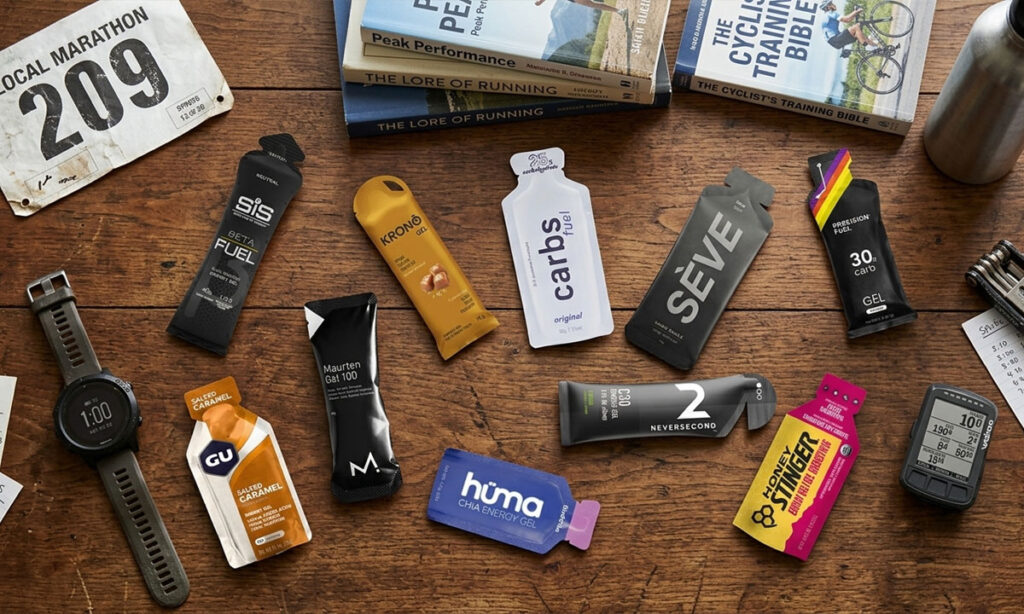
You’ve watched enough race footage to know every pro is running with something tucked in their kit. The brands are everywhere: Maurten at Boston, GU at every aid station, Precision Fuel on the Tour. So you Google it, land on a wall of options, and realise nobody’s actually told you what makes one gel different from another. This guide breaks down 10 of the most popular energy gels for runners and cyclists, covering the specs, the texture, and who each one actually suits, so you can stop buying blind and start fuelling with a plan.
Affiliate disclaimer: Some links on this page are affiliate links. If you buy through them, Even Splits Lab may earn a small commission at no extra cost to you. It helps keep the site running and the content free.
TL;DR
For most recreational runners and cyclists, GU or Neversecond C30 hit the sweet spot of carbs, sodium, and availability. For longer efforts where you need to load more carbs per hour, Carbs Fuel or SiS Beta Fuel are worth a look. If your stomach tends to revolt mid-race, start with Huma or Maurten.
Key Takeaways
- Carbs are the priority: aim for 30–60g per hour on shorter efforts, more as your race distance grows
- Sodium in a gel matters more in hot conditions or for salty sweaters; otherwise your hydration covers it
- High-carb gels (40–50g) aren’t necessarily better for shorter races. They can overwhelm a stomach not used to them
- Caffeine helps, but 100mg at hour three hits differently than 20mg at hour one. Plan the timing
- Two strong Canadian options on this list: Krono (Quebec) and Sève (Quebec). Worth supporting if you’re buying local
What to Look for in an Energy Gel
Before getting into the individual reviews, it helps to know what you’re actually comparing.
| Gel | Carbs | Cal | Sodium | Caffeine Option | Extras | Notes |
|---|---|---|---|---|---|---|
| Precision PF 30 | 30g | 120kcal | 0mg | 100mg | Mild citrus, no flavour fatigue | Low-stick texture, no water needed |
| Maurten Gel 100 | 25g | 100kcal | 20mg | 100mg | Hydrogel tech, no preservatives | Firm texture, love/hate |
| SiS Beta Fuel | 40g | 158kcal | ~20mg | 200mg (Nootropics ver.) | 1:0.8 malto:fructose ratio | High-carb, not isotonic |
| Krono | 21-30g | 80-120kcal | 160mg | 50mg (Citrus ver.) | Made in Quebec, organic, tapioca | Natural/real food style |
| Neversecond C30 | 30g | 120kcal | 200mg | 75mg (C30+) | Isotonic, liquid-like texture | Largest packet size |
| GU | 21-23g | 100kcal | 60–125mg | Up to 70mg | BCAAs (450mg), amino blend | Classic sticky gel |
| Honey Stinger | 24g | 90-100kcal | 45-60mg | 32mg | Organic honey/tapioca base | Real food, sweeter |
| Carbs Fuel | 25-50g | 100kcal | 65+mg | 100mg | 7 ingredients, thin consistency | Best carb/$ ratio |
| Huma Chia | 24-25g | 100kcal | 105mg | Up to 50mg | Real fruit + chia seeds | Smoother, steady release |
| Sève Endurance | 26g | 100kcal | 190mg | 70mg | Maple syrup base, citrate electrolytes | Canadian, natural, premium |
All specs are per serving. Caffeine column shows the caffeinated version dose where available.
Carbohydrates
This is the main job of a gel. Most standard gels land between 20–30g of carbs. Some go higher: Carbs Fuel and SiS Beta Fuel push 40–50g per packet, which sounds great until your gut says otherwise. The carb source matters too: gels using a mix of maltodextrin (glucose) and fructose absorb faster because they use two different gut pathways. Nearly everything on this list uses that dual-source approach.
Sodium
There’s a wide range here, from Maurten’s 20mg per gel to Carbs Fuel Salted at 450mg. Sodium helps you hold onto fluid and prevents cramping, but it’s not a replacement for a hydration strategy. If you’re sweating heavily or racing in the heat, gels with meaningful sodium (100–200mg+) do double duty. If you’re running a 40-minute sprint swim and the weather’s cool, you probably don’t need to optimise for sodium in your gel specifically. For a deeper look at sweat and sodium, the Sweat Rate Calculator can help you figure out your personal numbers.
Caffeine
It works. Multiple studies confirm it improves endurance performance by reducing perceived effort and improving focus. The timing matters more than most people think. Most athletes see the best results saving caffeine for the second half of a race. Many gels come in both caffeinated and non-caffeinated versions so you can plan that strategically. Doses range from 20mg (GU Salted Caramel) to 100mg (Maurten Caf, Precision Fuel Caf), roughly one espresso to two.
Texture
This is the one nobody talks about enough. A thick, sticky gel at race pace, in the wind, on a bike, with one hand? Terrible experience. Isotonic gels (Neversecond C30, some SiS products) are more liquid-like and go down without water. Hydrogel products (Maurten) have a firm, jelly-like consistency that either clicks for you immediately or feels strange forever. Real-food gels (Huma and Krono) are generally thinner and smoother than traditional maltodextrin-heavy options. Try before race day.
The 10 Gels: What You’re Getting
1. Precision Fuel PF 30
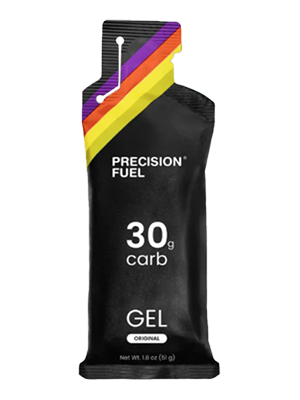
Precision Fuel built their brand on simplicity. 30g of carbs, a mild citrus flavour designed to avoid the sweetness overload that hits around gel number five, and a 2:1 glucose-to-fructose ratio. One notable thing: zero sodium. Precision’s philosophy is that you manage hydration and sodium separately through their drink mix or tablets. That’s a coherent system if you’re using their full product range, but it means this gel alone isn’t covering your electrolyte needs. There’s also a 100mg caffeine version that uses the same formula.
Pros: mild taste, no flavour fatigue, easy on the stomach, caffeine version available
Cons: no sodium, requires pairing with electrolyte source
Best for: athletes who manage sodium separately through a drink mix or electrolyte tabs, or shorter efforts where sodium isn’t a priority
2. Maurten Gel 100
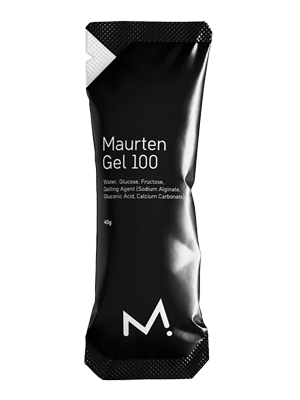
Maurten is what happens when you strip a gel down to almost nothing. Six ingredients, no flavours, no colours, no preservatives, and a hydrogel technology that’s supposed to pass through the stomach more gently than a standard gel. The texture is firm and jelly-like, not syrupy. Athletes seem to fall into two camps on it: those who love that it goes down without water and doesn’t sit heavy, and those who find the texture genuinely off-putting. The lack of sodium (just 20mg) is a real limitation for hot-weather events. Price per gel is the highest on this list.
Pros: minimal ingredients, easy on the stomach, no flavour fatigue, caffeine version available
Cons: expensive, low sodium, texture takes getting used to
Best for: athletes with sensitive stomachs, or anyone who gets flavour fatigue easily on long efforts
3. SiS Beta Fuel
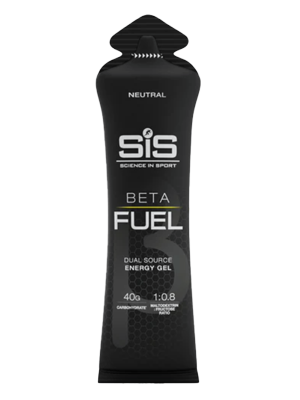
The standout spec here is 40g of carbs per gel, more than most competitors. SiS uses a 1:0.8 maltodextrin-to-fructose ratio, which they claim improves absorption efficiency compared to the standard 2:1 ratio. The research behind this is real, though the real-world performance difference is probably modest for most recreational athletes. What’s more relevant: 40g per gel means you need fewer gels per hour to hit your carb targets, which simplifies logistics on long rides. Texture is thicker and syrupy. Not isotonic. Sodium is minimal. The Nootropics version adds 200mg of caffeine alongside nootropic compounds. That’s a high dose, so worth testing in training well before racing with it.
Pros: 40g carbs means less to carry, dual-source carbs, good flavour range
Cons: thick texture, low sodium, expensive per gel
Best for: long-course athletes looking to hit 80–120g carbs per hour without carrying a dozen gels
4. Krono
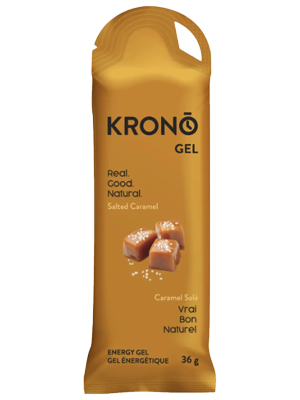
Krono is a Quebec-based brand that’s been around since 2011 and tends to fly under the radar outside Canada. Their gels use tapioca syrup and natural ingredients, are certified organic and vegan, and have a creamy texture that’s quite different from standard maltodextrin gels. Carbs land between 21 and 30g depending on the flavour, with Salted Caramel sitting at the higher end. The sodium content (around 160mg) is decent. A caffeinated citrus version adds 50mg of caffeine from green coffee bean extract. If you’re Canadian and want to support a local brand, Krono is a solid choice.
Pros: natural/organic, good sodium, smooth texture, Quebec-made
Cons: lower carb count, less widely available outside Canada
Best for: natural food preference, Canadian athletes, anyone who wants a creamy gel texture
5. Neversecond C30
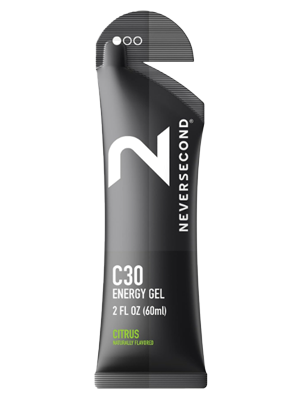
Neversecond built the C30 specifically around the modular fuelling concept: every product delivers carbs and sodium in consistent 30g / 200mg increments, so it’s easy to calculate exactly what you’re taking in. The C30 is isotonic and liquid-like, far easier to get down at race pace than a traditional sticky gel, and you don’t need to chase it with water. The 200mg sodium per gel is one of the highest on this list, which matters on hot race days. Larger packet than some alternatives, so worth checking it fits in your kit. Caffeinated version (C30+) adds 75mg.
Pros: high sodium (200mg), isotonic/liquid texture, consistent modular dosing, no water needed
Cons: larger packet than most, not available everywhere
Best for: structured athletes who want to track exactly what they’re taking in, or salty sweaters who need sodium in their gel
6. GU Energy
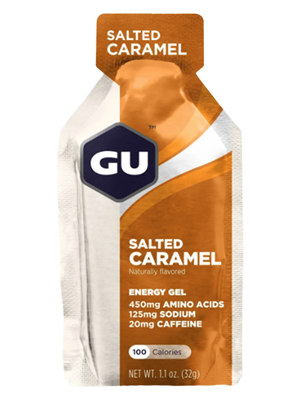
GU is the original energy gel. They launched in 1993 and have been the default choice at race expos ever since. Flavours are the widest range on this list, and most of them are genuinely good. Carbs land at 21 to 23g and sodium runs 60 to 125mg depending on the flavour. They also add BCAAs (450mg) which theoretically helps with muscle breakdown on long efforts. Caffeinated versions run 20 to 40mg. Classic thick, sticky texture. You want water with this one.
Pros: widely available, good sodium, BCAAs, pleasant flavour, affordable
Cons: lower carb count, traditional sticky texture, needs water
Best for: first-timer who wants something reliable, athletes who value flavour variety
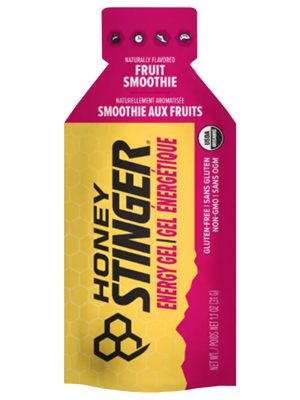
7. Honey Stinger
Honey Stinger’s appeal is the ingredient list: organic tapioca syrup, organic honey, real flavourings, no maltodextrin. It’s closer to actual food than most gels, which helps on the stomach. The texture is similar to a standard gel, though the honey base gives the sweetness a more natural quality. At 24g carbs and around 45 to 60mg sodium depending on the flavour, it’s not a performance powerhouse, but it’s a solid choice for athletes who struggle with conventional gels. Caffeinated versions are available with 32mg from green tea extract.
Pros: natural ingredients, honey base, gentle on the stomach, thinner consistency
Cons: lower carbs and sodium than performance-focused options, sweeter taste
Best for: athletes who struggle with conventional gels, shorter efforts, youth athletes
8. Carbs Fuel
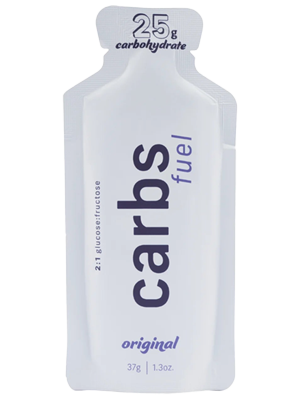
Carbs Fuel does one thing and does it loudly: 25g of carbs for $1.50. Simple, clean, and thin enough to go down without water. Seven ingredients, no preservatives, no gelling agents. The 25g size is the easier entry point if you’re new to Carbs Fuel or want more flexibility in how you dose carbs per hour. There’s a 50g version if you want to go bigger, plus a salted version (450mg sodium) and a caffeinated version. For athletes who want to dial in their carb intake precisely without committing to a large hit at once, this is the most cost-effective option on the market.
Pros: thin texture, minimal ingredients, very affordable ($1.50/gel), easy to dose
Cons: lower carbs per gel means more packets for longer efforts
Best for: athletes who want precise carb dosing, anyone who wants to maximize carb-per-dollar ratio
9. Huma Chia
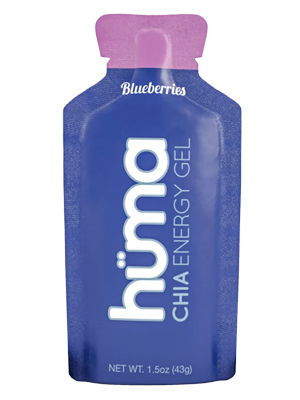
Huma is the chia seed gel. Real fruit puree, brown rice syrup, ground chia seeds, sea salt. The ingredients list reads more like a smoothie than a sports product. The chia fibre slows the carb release slightly, which gives a steadier energy curve instead of a spike and crash. At 24 to 25g of carbs and 105mg sodium, it sits comfortably in the middle of the pack. Athletes with sensitive stomachs consistently rate it among the easiest to digest. The texture is thinner than most, the flavours are genuinely good, and caffeinated options run 25 to 50mg depending on the flavour.
Pros: real food ingredients, easy on the stomach, good texture, steady energy release
Cons: lower carb count, chia seeds may cause GI issues for some, slightly pricier
Best for: athletes with GI sensitivity, anyone who prefers real-food ingredients
10. Sève Endurance
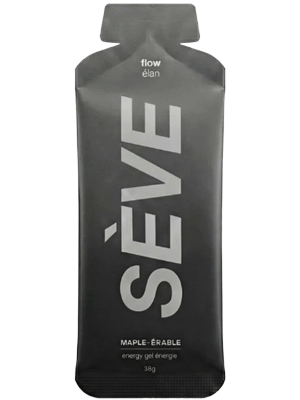
Sève is a Canadian brand built entirely around maple syrup as the carb base. 26g carbs per gel, around 190mg sodium, and a thoughtful formulation that uses sodium citrate and potassium citrate instead of standard table salt, a choice they make specifically because citrate forms are gentler on the gut. There’s a caffeinated version (Focus) with 70mg. Made in Canada with sustainably sourced maple syrup from local producers. Premium price point, but if you want a natural gel that actually has a coherent electrolyte story, Sève is worth knowing about.
Pros: natural maple base, quality electrolyte formulation, Canadian-made, caffeinated option available
Cons: lower carb count, premium price, less widely distributed
Best for: Canadian athletes who want a natural gel, anyone who prioritizes gut comfort and electrolyte quality
Best For: Quick Picks
Best Overall: Neversecond C30
High sodium, consistent dosing, easy texture, and a system that scales to any race distance. The liquid-like consistency is a game-changer for anyone who’s choked on a sticky gel at race pace.
Best for High-Carb Loading: Carbs Fuel Original
25g of carbs at $1.50 a gel, with a 50g version available if you want to go bigger. Nothing else comes close on cost per gram of carbs.
Best for Sensitive Stomachs: Huma or Maurten
Different approaches to the same problem. Huma uses real food; Maurten uses hydrogel tech. Try both in training and see which your gut prefers.
Best Neutral/Unflavoured: Precision Fuel PF 30
Mild citrus that barely registers as a flavour. Precision’s entire product line was designed to avoid flavour fatigue over hours of effort.
Best Canadian Pick: Krono or Sève
Krono for creamy texture and organic ingredients. Sève for maple flavour and a premium electrolyte formulation. Both are Quebec-made and both are genuinely good.
Best Value: Carbs Fuel or GU
Carbs Fuel wins on carb-per-dollar, full stop. GU wins on availability and variety of flavours if you want something you can grab at any running store.
A Note on Gel Timing
The gel itself matters less than when you take it. For efforts under 60–75 minutes, you likely don’t need a gel at all. Your glycogen stores are sufficient. For anything longer, start fuelling early: first gel around 30–45 minutes in, then every 30–45 minutes after that. Waiting until you feel depleted is too late. The carbs take time to absorb. If you want to build a specific fuelling plan, the Even Splits Lab Fuel Strategy Calculator can help you map out timing and totals for your specific race distance.
FAQ
It depends on your sweat rate and how much you’re drinking. For shorter races (sprint, Olympic), your drink mix probably covers it. For half-iron distance and beyond, having sodium in your gel adds a useful buffer, especially if there are aid station gaps or hot conditions. Heavy, salty sweaters should prioritise it regardless of distance. Read more about calculating your individual sweat rate and sodium needs at the Even Splits Lab Sweat Rate Calculator.
Not unless you’re used to high caffeine intake. Most coaches recommend saving caffeinated gels for the back half of a race when fatigue is setting in. A common strategy: non-caffeinated gels early, switch to caffeinated for the run leg. If you’re sensitive to caffeine, 20–30mg doses (GU, Honey Stinger) are more manageable than 100mg doses (Maurten Caf, Precision Caf).
Probably two to three, depending on your pace. Most recreational runners finish a half marathon in 1:45 to 2:30. A good starting point is one gel around 45 minutes in, then one every 30 to 45 minutes after that. At a slower pace you have more time on course, so you may want that third gel around the 1:45 mark. At a faster pace, two is usually enough. Use our Fuel Strategy Calculator to build a plan around your exact finish time.
An isotonic gel is formulated to match the concentration of your body fluids, so it doesn’t require water to be drawn into the gut for absorption. You can take it without a water chaser. Regular gels (GU, SiS Beta Fuel, etc.) are more concentrated and work best washed down with water. Skipping the water can slow absorption and cause stomach issues in some athletes.