Most century ride advice comes down to “eat something every 20 minutes” and a list of someone else’s favourite gels. That works until mile 60, when vague guidance turns into a bonk nobody saw coming. A century is long enough that small fuelling mistakes compound over the day: too little carbohydrate and the legs run out of fuel before the finish, too much too fast and the stomach shuts the whole plan down instead. The fix isn’t another opinion, it’s real numbers. This is what century ride nutrition actually looks like when it’s built around carbohydrate, sodium, and fluid targets instead of guesswork.
TL;DR
A century ride (100 miles, 5 to 7 hours for most riders) needs roughly 60 to 90 grams of carbohydrate per hour once the ride passes the two and a half hour mark, split between drink mix, gels, and real food. Sodium and fluid needs scale with individual sweat rate, not a fixed number, and the whole plan should be tested on long training rides well before race day.
Key Takeaways
- Carbohydrate needs climb with ride duration: light for anything under 90 minutes, up to 60 to 90 g/hour once past the 2.5-hour mark, which covers most of a century.
- At the higher intake rates, mixing carb sources (glucose plus fructose) helps the gut absorb more without the stomach revolting.
- Sodium and fluid targets should come from personal sweat rate, not a number copied off a gel wrapper.
- A slower finish time means more total carbohydrate over the day, even at the same per-hour rate.
- Nothing new on race day. Every gel, bar, and drink mix ratio needs a dry run on a long training ride first.
Why Century Ride Nutrition Is Different From a Short Ride
A one-hour ride barely touches glycogen stores. A century does. The body holds roughly 400 to 600 grams of glycogen in the muscles and another 90 to 120 grams in the liver, and once exercise passes the two-hour mark, those stores start running down faster than the body can top them up on its own. That’s the point where eating during the ride stops being optional and starts being the difference between finishing strong and grinding out the last 20 miles on fumes.
How Many Carbs Per Hour Does a Century Actually Need
Sport nutrition research has moved past the old flat “60 grams an hour” rule. The current guidance scales with how long the effort lasts:
| Duration | Carb Target | Notes |
|---|---|---|
| Under 90 min | Little to none needed | Not relevant for a century, included for context. |
| 90 min–2.5 hrs | 30 to 60 g/hour | Applies to the early miles before duration stacks up. |
| 2.5+ hrs | 60 to 90 g/hour | Multiple carb sources (glucose plus fructose) help absorption at the higher end. |
Most riders won’t hit 90 g/hour with a single carb source. That’s where mixing glucose and fructose, usually close to a 2:1 ratio, helps: the gut uses separate pathways to absorb each one, so combining them lets more carbohydrate in without the bloating or cramping that comes from overloading a single sugar type.
Pacing Changes the Plan: Easy Century vs. Race-Pace Century
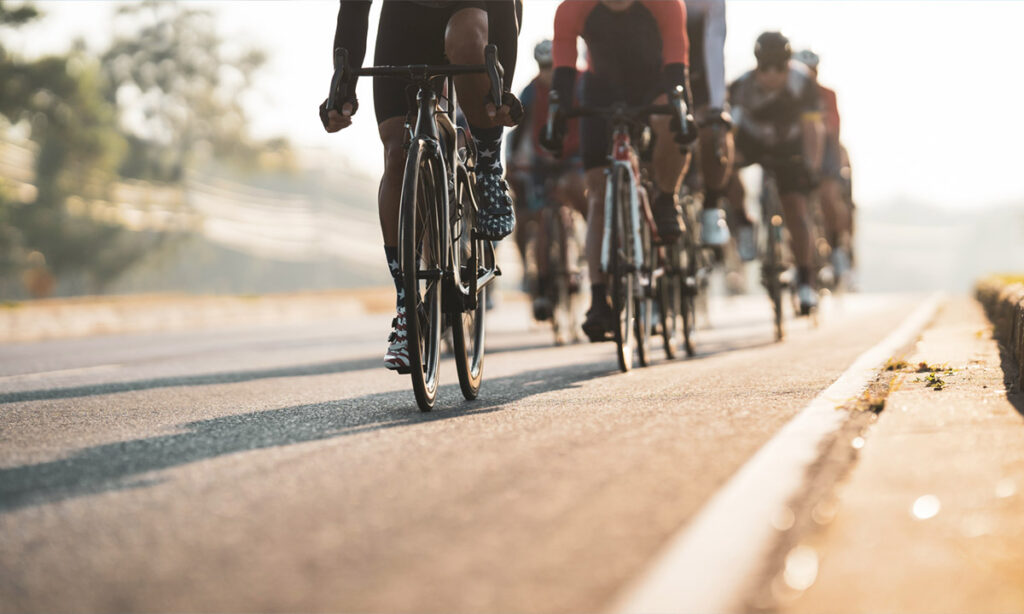
A century ridden at a relaxed, conversational pace is a different metabolic event than one ridden hard in a fast group or a timed gran fondo, and the fuelling plan should reflect that. At an easy pace, the body leans more on fat for fuel, carb burn sits toward the lower end of the range above, and the stomach can usually handle real food (bananas, bars, sandwiches) most of the day without issue.
Push the pace, hold a pace line, or chase a group for hours, and that shifts fast. Higher intensity pushes the body toward carbohydrate as its primary fuel source, so intake needs move toward the top of the 60 to 90 g/hour range, sometimes past it, while the stomach’s tolerance for anything besides liquid carbs or gels drops. Sweat rate and sodium loss climb too, since effort drives heat production more than duration does. Anyone training for or riding a genuinely hard century, a timed gran fondo, a fast group ride, an event with real racing in it, should plan around the upper end of these numbers and lean more on drink mix and gels than solid food.
Sodium and Fluids: The Other Half of the Equation
Carbohydrate gets most of the attention, but a century in the heat can be lost on hydration alone. Sodium’s real job here is helping the body retain fluid and absorb it properly, not preventing muscle cramps directly, that’s a separate topic tied more to neuromuscular fatigue than salt. Fluid and sodium needs vary a lot between riders, which is exactly why a flat number from a gel wrapper doesn’t work for everyone. Our Sweat Rate Calculator [link: Sweat Rate Calculator URL] gives a personal starting point, and the full breakdown of how much sodium a ride actually needs lives in How Much Sodium Do You Actually Need During a Race.
Hot weather changes both sides of this equation fast. If the century falls on a warm day, the adjustments in Hot Weather Racing: Adjusting Your Nutrition Plan are worth reading alongside this one.
Building a Practical Fuelling Schedule for 100 Miles
The plan matters more than any single product. A workable rhythm for most riders looks like this:
- Pre-ride (2 to 3 hours before start): a carb-focused meal, low in fibre and fat so it doesn’t sit heavy. Something like oatmeal with banana and honey, or toast with jam, roughly 60 to 90g of carbohydrate.
- First hour: light on carbs, maybe a single 20 to 25g gel or a few sips of a light drink mix. This is the warm-up, not the point to start maxing out intake.
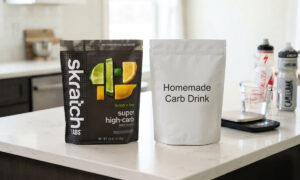
- Hour two onward: settle into 60 to 90g/hour. A common setup is one bottle of 60 to 90g carb drink mix sipped steadily over the hour, plus a 20 to 25g gel around the 30-minute mark if riding toward the top of that range.
- Real food break: around the halfway point, half a banana, a small handful of dates, or a rice cake for variety. Useful once gels start to lose their appeal, which happens to almost everyone by mile 50.
- Aid stations: treat them as a top-up, not the whole plan. Carrying at least one hour’s worth of backup fuel avoids being stuck if a stop doesn’t have what works.
For product options, The 10 Best Energy Gels for Runners and Cyclists breaks down what’s actually worth carrying. And if the wheels do come off mid-ride, The Difference Between Bonking and Cramping (And How to Fix Both) explains which problem is actually happening and what to do about it.
Metric Century Adjustment (100km)
A metric century is roughly 60 to 65 percent of the distance and time of a full century for most riders, usually landing in the 3 to 4.5 hour range rather than 5 to 7. The same per-hour carb, sodium, and fluid targets above still apply since they’re based on duration, not distance, but total intake for the day will be lower simply because the ride is shorter. The fuelling schedule doesn’t need to change, just the total volume carried.
Common Fuelling Mistakes on Century Rides
Most fuelling failures on a century show up mid-ride as a bonk, a stomach that won’t cooperate, or cramping that has nothing to do with sodium at all. But the actual mistake usually happened earlier, in planning or in the first hour, not in the moment it shows up. The patterns below cause most of the trouble:
- Waiting until hunger or fatigue shows up before eating, by then the deficit is already building.
- Relying entirely on aid station food without a backup plan.
- Drinking only carb-heavy sports drink and skipping plain water, which can concentrate sodium intake more than intended.
- Trying a new gel, bar, or drink mix for the first time on event day.
Use Our Fuel Calculator
Punch in body weight and expected ride duration to get a personalized hourly carbohydrate target instead of relying on the general ranges above.
FAQ
(Plain text only, no FAQ schema markup per current Yoast guidance.)
Q: How many carbs do I need for a 100-mile bike ride?
A: Most riders should aim for 60 to 90 grams of carbohydrate per hour once the ride passes 2.5 hours, which covers the bulk of a century.
Q: Do I need electrolyte drinks for a century ride?
A: Sodium and fluid needs depend on individual sweat rate. A sweat rate test gives a more accurate number than a generic recommendation.
Q: Can I fuel a century ride on real food alone?
A: Yes, as long as it’s easy to digest and tested in training. Many riders mix real food with gels and drink mix rather than relying on one source.
Related Posts
- For sodium specifics: How Much Sodium Do You Actually Need During a Race
- For gel and bar options: The 10 Best Energy Gels for Runners and Cyclists
- For troubleshooting mid-ride: The Difference Between Bonking and Cramping (And How to Fix Both)
Sources / References
Jeukendrup, A. (2013). The new carbohydrate intake recommendations. Nestle Nutr Inst Workshop Ser.