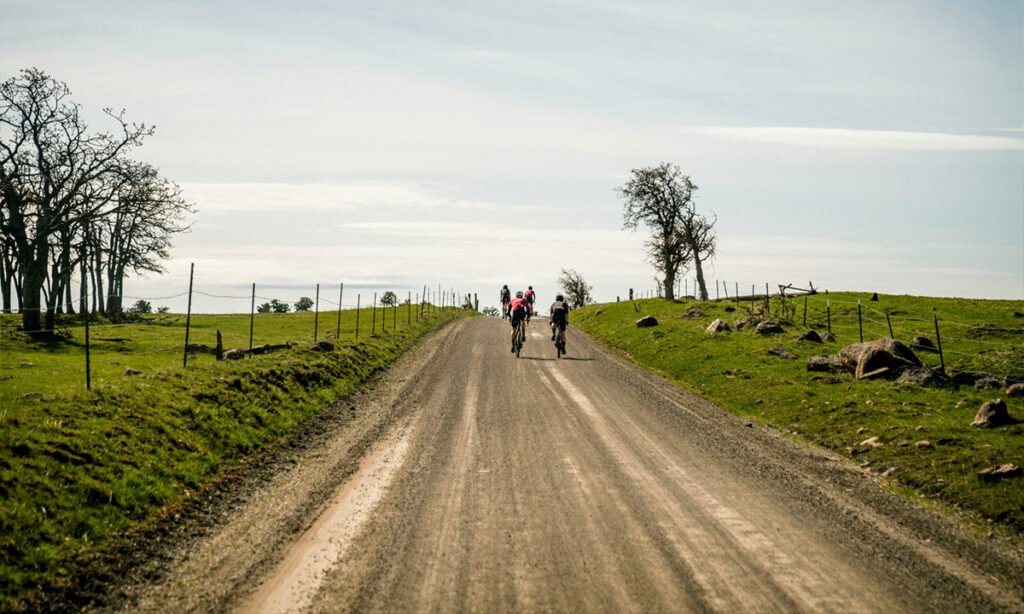
I’ve been quietly stalking Canyon Grizl builds for a few months now, telling myself it’s just research for The Rift or Unbound, not an actual commitment. The more Unbound race reports I read, the less it sounded like a straightforward physical test and the more it sounded like something closer to respect than a PR flex. So I started digging into what actually separates a 200 mile gravel race from the discipline I’ve spent years training for, and the honest answer surprised me. If you’re weighing gravel racing vs triathlon as your next big goal, the gap isn’t where you’d expect.
TL;DR
Both sports push your endurance to a genuine limit, but they test completely different things. Long-course triathlon rewards pacing discipline and fuelling execution split across three disciplines. Gravel racing demands off-road bike handling and total self-sufficiency, often for longer stretches without support than most triathletes have ever ridden. Which one “tests you more” depends entirely on which gap you haven’t trained for yet.
Key Takeaways
- A full Ironman and Unbound’s 200 mile race land in a similar total time window, but the effort inside that window looks nothing alike
- Terrain and bike handling, not fitness, is the real gap for triathletes trying gravel
- Unbound’s checkpoints sit 75 to 100 miles apart. An Ironman bike or run course gives you aid every 10 to 15 miles
- Self-sufficiency, fixing your own mechanicals, navigating your own course, carrying your own calories, is non-negotiable in gravel racing
- Pro triathletes who’ve raced Unbound prove the fitness carries over. The skill and logistics take longer to learn
Distance and Time on Course: Same Hours, Different Suffering
Start with the bike leg alone and the two look almost comparable. A full Ironman bike course is 112 miles, mostly closed or controlled roads, mostly rolling to flat depending on the venue. Unbound’s flagship distance is 202.5 miles, nearly double, on gravel and dirt roads through the Flint Hills of Kansas with 10,188 feet (roughly 3,105 metres) of elevation gain built in.
2025 Unbound Gravel 200-mile course, mapped via RideWithGPS. Route may vary by year.
But that comparison undersells triathlon, because the bike is one third of the day. Zoom out to the full Ironman distance, a 2.4 mile swim, 112 mile bike, and 26.2 mile run, and a mid-pack age grouper is looking at 11 to 17 hours of racing. Unbound’s 200 mile winners finish around 10 hours; most of the field is out there closer to 11 to 20 hours, riding under a 10 mph average pace cutoff the whole way.
So the total time on course lands in a similar zone. What’s different is the shape of the effort. Triathlon spreads the workload across three muscle groups and three disciplines, with transitions that function as built-in breaks. Gravel racing is one continuous activity, on one bike, in one position, often for longer than most triathletes have ever spent on a saddle in a single sitting. If you’ve read our T100 vs. 70.3 comparison, you already know total race time tells you less than you’d think about which effort actually hurts more.
Terrain and Bike Handling: The Skill Gap Triathletes Don’t See Coming
This is where the two sports stop resembling each other. Most Ironman bike courses are designed to be fast and predictable: closed roads, smooth pavement, rolling hills you can pace by power and forget about steering. You spend the ride in an aero tuck, thinking about watts, not about the road surface underneath you.
Gravel racing does not let you check out like that. Unbound’s course runs through loose limestone, rutted dirt, and, depending on the weather that year, the kind of mud locals call “peanut butter” because it cakes onto everything and stops your wheels from turning. You’re constantly reading the terrain: picking lines through rocks, braking earlier on loose descents, adjusting your grip on a bike that’s heavier and wider tired than anything you’ve raced on. A gravel bike built for something like Unbound typically runs several pounds heavier than a triathlon bike, with wider tires and a more upright position built for control, not aerodynamics.
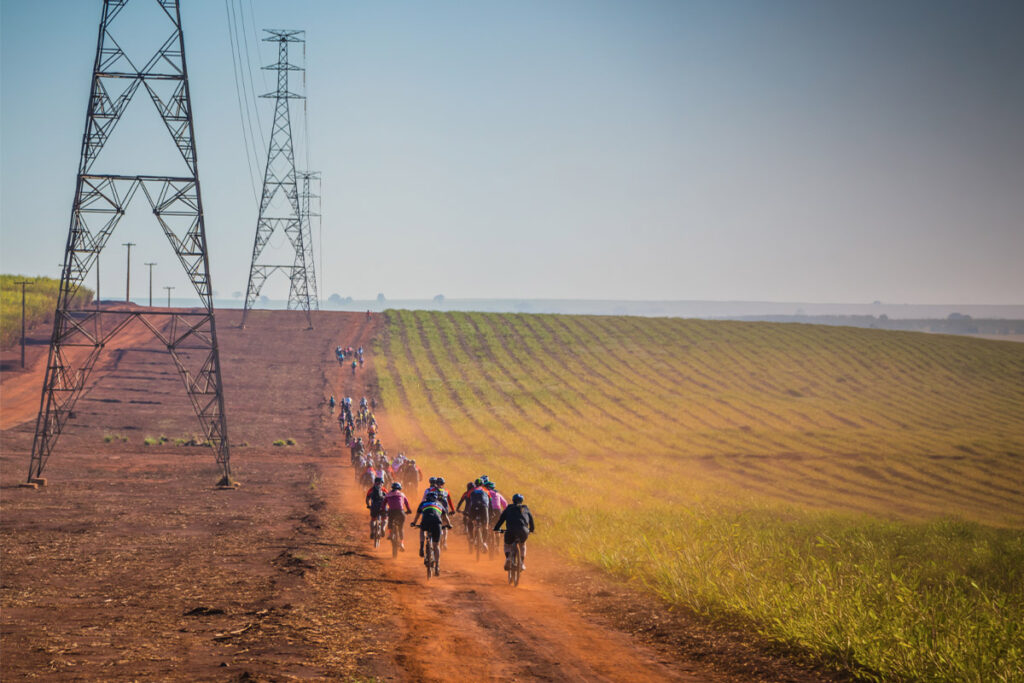
None of that shows up in your FTP. It shows up the first time you hit a rutted downhill at 30 km/h and your instinct says “brake hard,” which is exactly the wrong move on loose gravel. I’ll be honest: my zone 2 base fitness means nothing on a surface I don’t know how to read yet.
Self-Sufficiency: Where Ironman Spoils You
This is the gap that actually decides whether a triathlete finishes Unbound feeling strong or finishes it in tears on the side of the road. An Ironman course, whatever its flaws, is built to support you. Aid stations show up every 10 to 15 miles on the bike and run with fluids, gels, and course marshals. Mechanical support is on call. The course itself is fully marked, closed to most traffic, and monitored the entire way.
Unbound gives you two checkpoints across the full 200 miles, at Alma and Council Grove, roughly 75 to 100 miles apart depending on the year’s route. Outside of those two points, official rules disqualify you for taking any outside support at all. If you flat, you fix it yourself, on the side of a gravel road, with whatever’s in your saddle bag. If you’re not sure where the course goes, you’re navigating off a cue sheet or GPS file, not a marshal pointing the way.
That changes how you fuel, too. You’re not grazing an aid station table every 20 minutes. You’re carrying enough calories and fluid to survive a 75 to 100 mile stretch entirely on your own, which is a different planning problem than sipping what’s handed to you. The math is the same principle we cover in our century ride nutrition guide, just stretched over a longer, less supported gap.
How Much Should You Actually Carry?
Use our Fuel Calculator to work out the carbs and fluid you need between checkpoints,
not just per hour.
What Happens When Triathletes Actually Try Gravel Racing
Fitness aside, does triathlon experience actually help? The short answer, based on the triathletes who’ve actually lined up at Unbound, is yes, but only partway.
Ironman champion Angela Naeth finished 6th in the women’s field at Unbound in 12:43:16, her first real gravel race. She said afterward it was “one of the best times I’ve had on two wheels,” and went on to add gravel racing to her pro triathlon season rather than treat it as a one-off.
“One of the best times I’ve had on two wheels.”
Cameron Wurf, an Ironman pro who also races WorldTour cycling, went in as what was essentially a recon mission. Mechanical trouble and bad luck dropped him to 86th, and afterward he was blunt that road or triathlon success doesn’t transfer automatically, warning that any outsider assuming an easy win would find “a big target on their back.” Even a rider with Wurf’s engine found the terrain humbling.
Former pro triathlete Jordan Rapp has cracked the top 10 overall at Unbound in a past edition, which is probably the clearest proof that the aerobic engine you build for Ironman absolutely transfers. What doesn’t transfer automatically is the bike handling, the mechanical self-reliance, and the pacing discipline for a totally different kind of terrain.
Recovery and Logistics: One Discipline vs. Three
Ironman’s three disciplines are, in a strange way, kinder to your body than they get credit for. Swimming, cycling, and running load different muscle groups, so no single system gets hammered for the entire race. Transitions give you a minute or two to reset. Recovery afterward is broad fatigue across your whole body, but rarely one joint or muscle group in isolation.
Gravel racing asks one system to do everything for 10 to 20 hours straight. Your hands, wrists, and lower back absorb constant vibration and impact that a smooth Ironman bike course never puts you through. Saddle position doesn’t change for the entire day, the sort of pacing-by-feel problem we get into in our bike pacing and FTP guide. The muscular fatigue is more localized, and the recovery demand shows up differently, more like an ultramarathon on two wheels than a triathlon.
Logistically, gravel racing is simpler in one specific way: one bike, one sport, one set of gear to obsess over instead of three. No wetsuit strategy, no transition bags, no run shoes to break in. But what you save in gear logistics, you spend in self-sufficiency planning: tools, spares, navigation, and a fuelling plan built for hours between support instead of minutes.
So where does that leave me and the Grizl I keep pricing out? Probably still on the fence, but for a more honest reason than I expected. It’s not the distance that worries me anymore. It’s admitting I’d be starting from zero on bike handling and self-sufficiency, two things years of pool laps and structured bike sessions never had to teach me. If you’re a triathlete eyeing your own first gravel race, that’s the real training block to plan for, not just more saddle time.
Sources / References
Triathlete.com — Angela Naeth on her Unbound finish
Triathlete.com — Cam Wurf on crossing from road to tri to gravel