A good running watch doesn’t have to cost $600. The gap between budget and premium has closed a lot in the last few years. GPS accuracy, heart rate monitoring, structured workouts. You can get all of it without the price tag that makes you wince. If you’re trying to figure out which running watches on a budget are actually worth buying, here’s what I’d recommend.
Affiliate disclaimer: This post contains affiliate links. If you buy through one of them, Even Splits Lab earns a small commission at no extra cost to you.
TL;DR: The Garmin Forerunner 55 is the best starting point for most runners at around $220 CAD. If you want a brighter screen, step up to the Forerunner 165. If battery life is your priority, the COROS PACE 4 is hard to beat. The Apple Watch SE can work if you already own one, but it’s not the right watch to buy specifically for running.
Key Takeaways
- You don’t need to spend more than $350 CAD to get a capable GPS running watch
- The Garmin Forerunner 55 is the best value pick for beginners and recreational runners
- COROS offers better battery life than Garmin at every price point
- The Apple Watch SE has GPS and heart rate, but the battery makes it a poor dedicated running watch
- Polar is worth considering if heart rate accuracy is your top priority
What to Look for in a Budget Running Watch
Before getting into specific models, it helps to know what actually matters.
GPS accuracy is non-negotiable. Your watch needs to track distance and pace reliably. Most watches in this price range are accurate to within a few metres under open sky. The gap shows up in cities with tall buildings or dense tree cover. That’s where dual-frequency GPS (found on the COROS PACE 4) gives you an edge.
Battery life in GPS mode is where budget watches vary a lot. A watch showing 10 days of battery life means nothing if it only lasts 8 hours with GPS running. For most training runs, 15+ hours is more than enough. For ultras or long events, you want more.
Heart rate monitoring from the wrist is never as accurate as a chest strap, but it’s close enough for steady-state runs. The main limitation is during high-intensity intervals. Optical sensors struggle when your heart rate changes quickly. Polar is the exception at this price range; their optical HR sensor is the most accurate of the bunch.
Training guidance and ecosystem matter more than people expect. Garmin Connect is the most mature platform. It syncs with Strava, most physio and coaching platforms, and gives you daily suggested workouts that actually adapt to how you’ve been training. COROS’s app is simpler but solid. Apple Health is fine for casual use but thin on running-specific analysis.
The Best Budget Running Watches in 2026
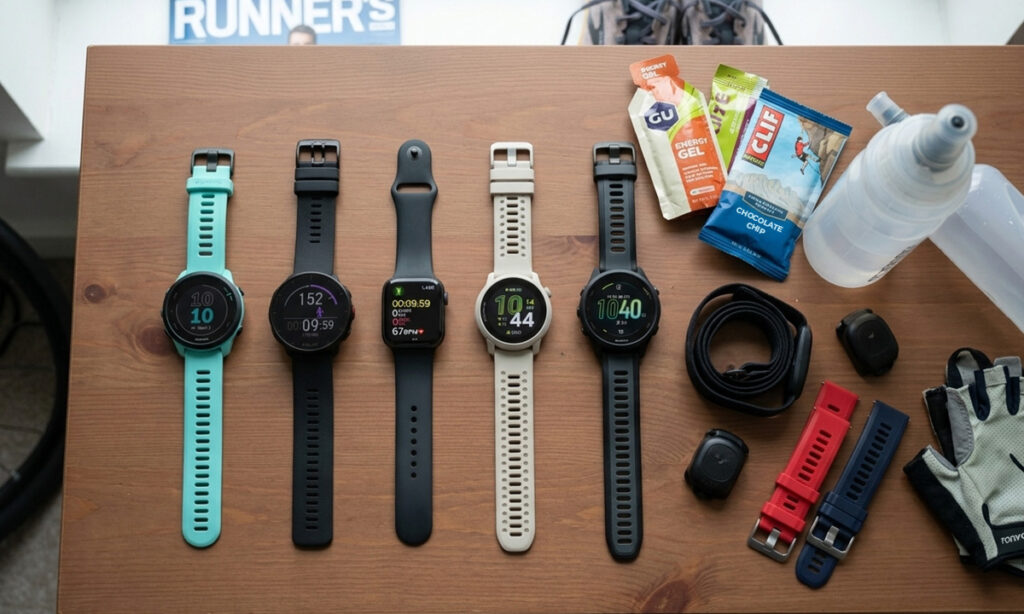
Here’s a quick comparison before we get into each watch:
| Watch | Price (CAD / USD) | GPS Battery | Display | Best For |
|---|---|---|---|---|
| Garmin Forerunner 55 | ~$255 / ~$165 | 20 hrs | MIP | Beginners |
| Garmin Forerunner 165 | ~$340 / ~$199 | 19 hrs | AMOLED | Step-up pick |
| COROS PACE 4 | ~$349 / ~$249 | 38 hrs | MIP | Battery first |
| Polar Pacer | ~$329 / ~$224 | 35 hrs | MIP | HR accuracy |
| Apple Watch SE (3rd gen) | ~$299 / ~$249 | ~8 hrs | OLED | iPhone users only |
Prices in CAD and USD are approximate. Check Amazon CA or the brand’s site for current pricing.
1. Garmin Forerunner 55: Best Overall for Beginners
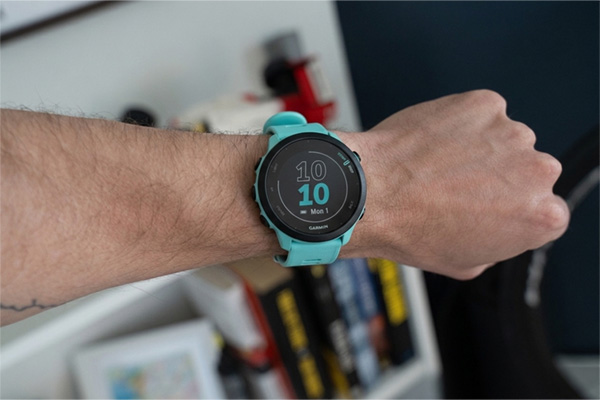
The Forerunner 55 is the easiest recommendation on this list. It does everything a recreational runner needs: accurate GPS, optical heart rate, daily suggested workouts, and up to 14 days of battery in smartwatch mode. GPS battery is rated at 20 hours, which covers anything short of an ultramarathon.
The display is a MIP screen, not AMOLED, so it won’t pop the way a smartphone screen does, but it’s readable in direct sunlight, which actually matters on a run. The interface is simple. You set it up, you run, it tracks.
The suggested workout feature is worth calling out. It looks at your recent training load and recovery and recommends what to do next. It won’t replace a proper training plan, but if you’ve been following your heart rate zones and want some structure, it’s a genuinely useful daily prompt. (If you’re still figuring out your zones, the heart rate zones post is a good starting point.)
Where the 55 falls short: no music storage, no AMOLED screen, no maps. If those things matter to you, the Forerunner 165 is worth the step up.
Garmin also just released the Forerunner 70 and 170 — worth a look if you want to see what’s new before committing.
Best for: Beginner to intermediate runners who want reliable GPS and training guidance without overcomplicating it.
Pros:
- Sharp AMOLED display
- Music storage (music version)
- All the Garmin training features at a mid-range price
Cons:
- Pushes the upper limit of “budget”
- GPS battery (19 hrs) is unremarkable for the price
- Music version costs more
2. Garmin Forerunner 165: Best Screen and Features Under $350
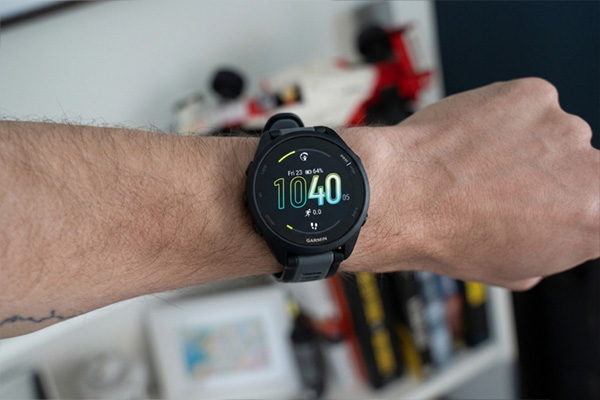
The Forerunner 165 is what the 55 would be if Garmin gave it a proper upgrade. The AMOLED screen is genuinely sharp. The kind of display that makes you realise how much you were squinting at your old watch. It also adds music storage (on the music version), which means you can leave your phone at home on shorter runs.
Training features are the same as the 55: daily suggested workouts, Body Battery energy tracking, sleep monitoring. GPS battery is 19 hours, roughly the same as the 55. Smartwatch battery is around 11 days. Nothing to complain about there.
The 165 sits at around $340 CAD, so it’s past the sub-$250 sweet spot, but it shows up in sales regularly and is worth keeping an eye on. If you’re buying one watch and want it to last a few years without feeling like you settled, this is probably the one.
Best for: Runners who want a better screen and music storage without spending Fenix money.
Pros:
- Sharp AMOLED display
- Music storage (music version)
- All the Garmin training features at a mid-range price
Cons:
- Pushes the upper limit of “budget”
- GPS battery (19 hrs) is unremarkable for the price
- Music version costs more
3. COROS PACE 4: Best Battery Life
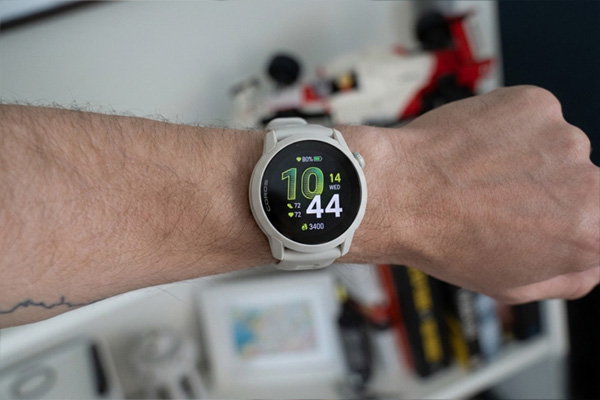
COROS doesn’t get as much attention as Garmin, but they should. The PACE 4 has 38 hours of GPS battery. That’s not a typo. The Forerunner 55 gets 20. For most runners this won’t matter, but if you’re doing long training weeks, back-to-back long runs, or you’re just the kind of person who forgets to charge things, that headroom is real.
It also weighs 30 grams with the nylon band, which makes it one of the lightest GPS watches you can buy at any price. You stop noticing it on your wrist pretty quickly.
The trade-off is the ecosystem. COROS’s app is clean and functional, but it’s not as deep as Garmin Connect. Third-party integrations exist but the library is smaller. If you’re already in the Garmin or Strava ecosystem, the switch has some friction. If you’re starting fresh, COROS is perfectly capable.
Note: The COROS PACE 3 was discontinued in early 2026 and replaced by the PACE 4 at ~$340 CAD ($249 USD). If you find a PACE 3 on clearance, it’s still a great watch.
Best for: Runners who prioritise battery life, ultrarunners, or anyone who hates charging their watch.
Pros:
- 38 hours of GPS battery is class-leading at this price
- Lightest watch on this list at 30g
- Dual-frequency GPS for better accuracy in cities and under trees
Cons:
- Smaller app ecosystem than Garmin
- Training metrics not as deep as Garmin Connect
- Less third-party integration (coaching platforms, etc.)
4. Polar Pacer: Best Heart Rate Accuracy
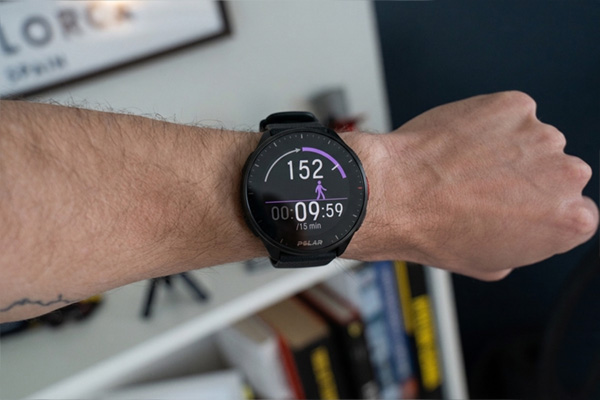
If you train seriously by heart rate zones, the Polar Pacer is worth a look. Polar has been building optical HR sensors for longer than most, and the accuracy at this price point is notably better than Garmin or COROS during higher-intensity work. If you’re doing intervals or threshold sessions and want the wrist sensor to actually keep up, Polar is the one.
GPS battery is around 35 hours, so battery life is solid too. The Polar Flow app is functional but not as polished as Garmin Connect. It does the job.
The Polar Pacer sits at around $329 CAD. It’s a more niche recommendation. Most recreational runners won’t notice the HR difference, but if heart rate accuracy is the thing you care most about, this watch earns it.
Best for: Runners who train by heart rate and want the most accurate wrist-based monitoring at this price.
Pros:
- Best optical heart rate accuracy on this list
- 35-hour GPS battery
- Clean, no-frills interface
Cons:
- Polar Flow app lags behind Garmin Connect and COROS
- Smaller community and fewer integrations
- Less name recognition means less secondhand support online
5. Apple Watch SE (3rd Gen): Only If You Already Own One
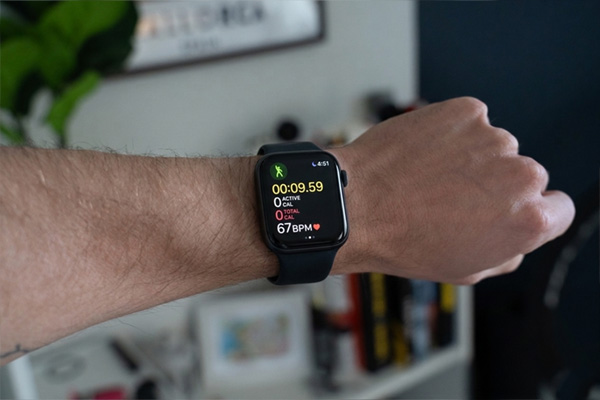
The Apple Watch SE has GPS, heart rate monitoring, and solid everyday fitness tracking. For a casual runner who wants to log a few runs a week and see their pace, it works. The problem is that it’s a smartwatch first and a running watch second, and that gap shows up pretty quickly if you want to actually train.
There are no running-specific metrics. No training load, no VO2 max estimate, no suggested workouts, no race predictions. You get pace, distance, and heart rate. That’s the ceiling. For a beginner just getting started, that might be enough. But if you want to follow a structured plan or track progress over time, you’ll outgrow it fast.
GPS accuracy is also a weak point compared to dedicated watches. The SE uses a single-frequency GPS chip, which can drift in urban areas or under tree cover. Distance and pace readings are generally fine on open roads, but don’t expect the same consistency you’d get from a Garmin or COROS.
Battery is less of a dealbreaker than people assume — 8 hours of GPS covers most training runs and half marathons without issue. But if you’re racing a full marathon with music and an always-on display, it gets tight.
It’s also iPhone-only, which rules it out entirely if you’re on Android.
If you already own one, there’s no reason to replace it just for running. Use it until you’ve outgrown it, then look at a dedicated watch. But it’s not the right watch to buy specifically for running when a Garmin Forerunner 55 costs less and does more where it counts.
Best for: iPhone users who already own one and aren’t ready to invest in a dedicated running watch yet.
Pros:
- Works seamlessly if you’re already in the Apple ecosystem
- Doubles as a capable everyday smartwatch
- Strong health tracking features beyond running
Cons:
- No running-specific training metrics (no VO2 max, no training load, no suggested workouts)
- Single-frequency GPS drifts in urban areas and under tree cover
- iPhone only
Do You Actually Need a Running Watch?
Your phone tracks runs. Strava works without a watch. So why bother?
Running with your phone in hand is cumbersome. Armband cases add bulk and weight. Phone GPS drains battery fast. A dedicated running watch weighs under 40 grams, lasts weeks on a charge, and gives you pace and distance on your wrist without fumbling.
If you’re running a few times a week and want to track your progress, a budget GPS watch is one of the more useful things you can add to your kit. It doesn’t have to be expensive.
FAQ
The Garmin Forerunner 55 at around $220 CAD. It covers everything a recreational runner needs: accurate GPS, heart rate monitoring, daily suggested workouts, and solid battery life.
Depends what you value. COROS has better battery life and a lighter build. Garmin has a deeper ecosystem and better third-party integrations. Both are accurate GPS watches. If battery is your priority, go COROS. If you want more training guidance and platform support, go Garmin.
Yes, but with caveats. GPS and heart rate work fine for shorter runs. The battery (around 8 hours of GPS use) is the limiting factor. For races longer than a half marathon, you may run into issues. It’s a capable everyday fitness watch, not a dedicated running watch.
If the AMOLED screen and music storage matter to you, yes. For pure running functionality the 55 covers everything. The 165 is a nicer watch to use day-to-day. If you find it on sale, it’s an easy call.
MIP (memory-in-pixel) screens are always-on and very readable in direct sunlight, but they’re lower resolution and don’t look as sharp. AMOLED screens are vivid and high-resolution but use more battery and can wash out in bright light unless you raise the brightness. For running, both work. AMOLED looks better at a glance; MIP is easier to read mid-run in full sun.
Sources:
- Garmin Forerunner 55 — garmin.com
- Garmin Forerunner 165 — garmin.com
- COROS PACE 4 — coros.com
- Polar Pacer — polar.com
- Apple Watch SE — apple.com/ca