If you have spent any time around triathlon, you have heard someone say “Kona” in a slightly lowered voice, like they are talking about a place that might not actually exist. It is the race people build a decade of training around. It is also one of the most misunderstood events in the sport, partly because the format keeps changing and partly because most coverage assumes you already know the backstory. You do not need to. So what is the Kona triathlon, really, and what would it take for a normal age-grouper to get there?
TL;DR: Kona is the Ironman World Championship: a 3.8 km swim, a 180 km bike, and a full marathon on the lava fields of Hawaii. You do not sign up for it. You earn a slot by being fast for your age and gender at a qualifying race. How fast is the part almost everyone underestimates.
Key takeaways
- Kona is the nickname for the full-distance Ironman World Championship, held in Kailua-Kona, Hawaii.
- It is a separate event from the 70.3 World Championship, which is in Nice, France for 2026.
- From 2026, men and women race together again on a single day for the first time since 2019.
- You qualify at other Ironman races. You cannot just register.
- Qualifying is genuinely hard, and the qualifying rules changed in 2025, so check current sources before you plan around them.
So what is Kona, exactly?
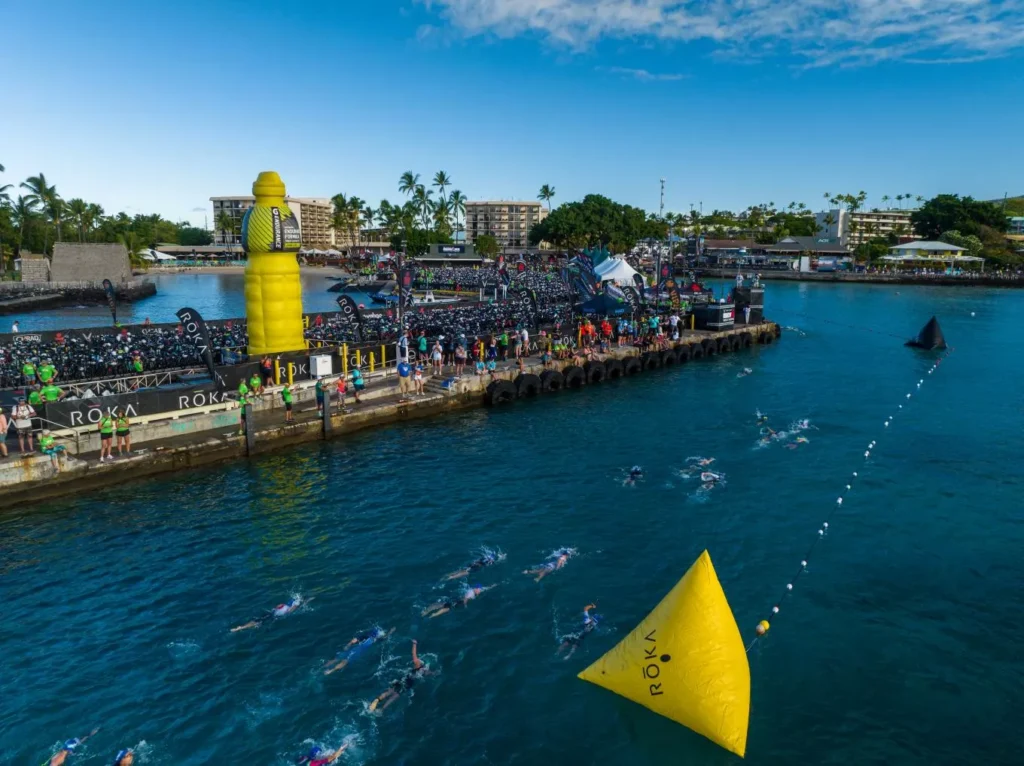
Kona is shorthand for the Ironman World Championship, the most prestigious long-course triathlon in the world. The Kona name comes from Kailua-Kona on the Big Island of Hawaii, where the race has lived for most of its history.
The distances are the full Ironman: a 3.8 km open-water swim, a 180 km bike across the lava fields, and then a 42.2 km marathon in the heat. If those numbers do not mean much yet, it is worth reading how the distances stack up first, because Kona sits at the very top of the ladder. We break the whole range down in our guide to triathlon distances, and if any of the jargon trips you up, the triathlon glossary has you covered.
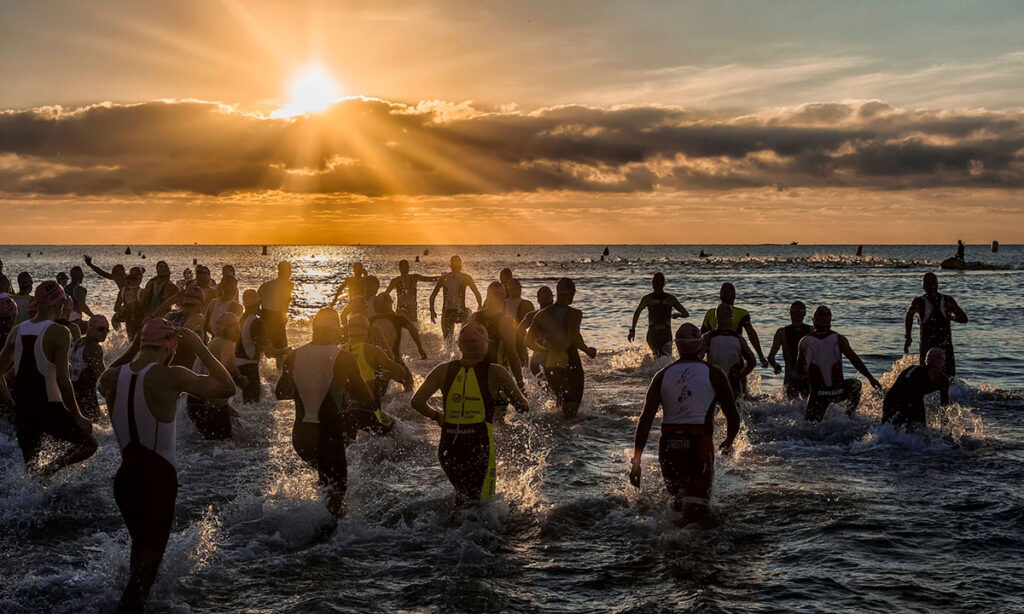
The race started in 1978 on Oahu, the result of an argument about which athletes were toughest. It moved to Kona in 1981 and basically never left. One thing that has changed recently: for a few years the men’s and women’s championships were split between Kona and Nice. From 2026, both fields are back in Kona, racing together on the same day, on October 10. Nearly 3,000 athletes get a start line.
Quick clarification, because people mix these up constantly: Kona is the full-distance championship. The Ironman 70.3 World Championship is a different race, held in Nice, France in 2026. Same brand, half the distance, separate qualifying.
Why it is the race everyone talks about
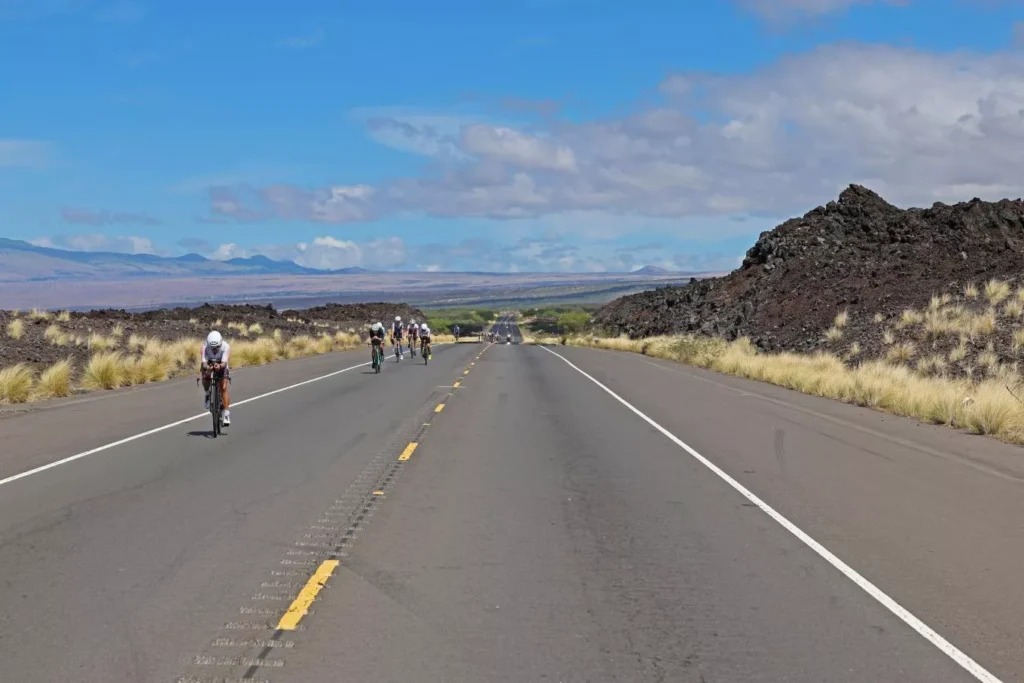
Part of it is the difficulty. The bike course runs through open lava fields where the heat radiates up at you and the crosswinds have ended a lot of good days. Part of it is the history: the sport’s biggest names made their reputations here.
The course records give you a sense of the level. The men’s record is 7:35:53, set by Patrick Lange in 2024. The women’s is 8:24:31, set by Lucy Charles-Barclay in 2023. For context, a lot of strong age-groupers are thrilled to go under twelve hours for the same distance. These are not the same animal.
Kona is at the other end of the scale. For something gentler, see the easiest 70.3 courses by leg.
How you actually get to Kona
This is the part newcomers find surprising. You cannot buy a Kona entry the way you would sign up for a local Olympic-distance race. You qualify by performing well at a designated Ironman event, then claiming a slot if one is offered to you.
The catch is that the qualifying system is in flux. For the 2026 cycle, Ironman moved from a fixed number of slots per age group to a performance-based, age-graded model that ranks athletes against a global standard. Then, a few months in, they adjusted it again after the results skewed heavily by gender. The short version: the rules are real, they matter, and they are still settling.
So rather than memorise numbers that might change, the smart move is to look at real finisher data for the specific race you are eyeing. That is exactly what Kona-Metrics is for. It pulls historical finish times and shows you the benchmark you would actually need to hit at a given qualifier, which is far more useful than a generic “you need to be fast” answer.
Want to see what qualifying actually takes at your target race? Kona-Metrics compares your expected splits against real historical finishers and shows the benchmark times by race, distance, and age group.
Could a regular age-grouper qualify? An honest reality check
Here is the part most “how to get to Kona” articles skip. For the overwhelming majority of recreational athletes, the honest answer is no, or at least not without a level of commitment that reshapes your life for years.
Ironman itself frames it bluntly: the people who make it to the World Championship represent roughly 0.0000035% of the world’s population. That is not meant to crush anyone. It is just useful to know what you are actually chasing before you organise your next three seasons around it. Plenty of very fit, very dedicated athletes train for a decade and never get a slot, and they are not doing anything wrong.
If you do want to chase it, the path is the same as it has always been: get meaningfully faster, pick your qualifying race with intent, and look at the real numbers for that race rather than a vibe. Use Kona-Metrics to find the benchmark, then be honest about the gap.
I have finished third and fourth in my age group at smaller local races, which felt fast right up until I looked up what it takes to crack the top ten in my age group on Kona-Metrics. The gap is not small. It quietly reset what I thought “competitive” even meant.
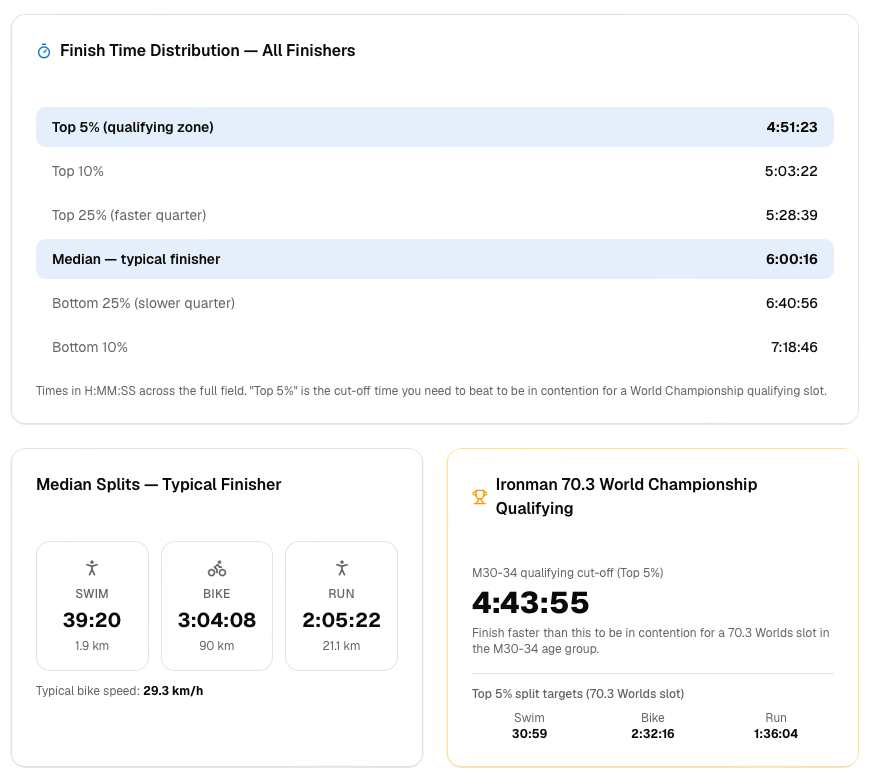
As an example, at Ironman 70.3 Mont-Tremblant, a 30-34 athlete needs to finish under 4:43:55 to be in qualifying contention. The typical finisher takes 6:00:16. Source: Kona-Metrics, 2026.
What to do if Kona is not the goal (and it probably is not)
Most of us are not qualifying for Kona, and that is a completely fine place to be. The useful version of this conversation is not “how do I get to Hawaii.” It is “how do I get faster and race better at the distances I actually do.”
That comes down to the boring, repeatable stuff. Training at the right intensities instead of grinding every session into the ground, which is what our Zone 2 vs Zone 3 guide is about. And not blowing up your race with a fuelling plan you made up on the start line. Our Fuel Calculator gives you a personalised carb target in about two minutes, which is the kind of small advantage that actually moves your finish time.
Kona is a fantastic thing to know about and admire. Whether it is a goal or just a faraway dream race, understanding what it is makes you a slightly more informed athlete, and that is worth a couple of minutes either way.
Kona is on the list, but it’s not the only race worth travelling for. See the best triathlons in the world.
A few quick answers
Where is Kona? Kailua-Kona, on the Big Island of Hawaii. The full-distance Ironman World Championship has been based there for most of its history and returns to a single-day format there in 2026.
Is Kona the same as the 70.3 World Championship? No. Kona is the full Ironman distance. The 70.3 World Championship is a separate, shorter event, held in Nice, France in 2026.
Do you have to be a pro to race Kona? No. Most of the field is age-group amateurs. You still have to qualify by performing well at a designated Ironman race, then accept a slot if offered.
Related posts
- New to the distances? Start with Sprint vs Olympic vs Half vs Full: Triathlon Distances Explained
- Building speed the smart way: Zone 2 vs Zone 3 Training: Which One Actually Builds Fitness?
Sources
- Kona-Metrics race database and estimator, kona-metrics.com
- Ironman, 2026 World Championship announcement, ironman.com
- Triathlete, Ironman’s New World Championship Qualifying System, Explained