
You felt the twinge, ignored it for a week, and now you cannot run without limping. The first thing most of us panic about is not the injury itself. It is the fitness we imagine draining away by the hour. Here is the reassuring part: you lose it slower than you fear, and most of what you built is still sitting there waiting for you. This is how to keep your fitness while injured without turning a small problem into a long one.
TL;DR: For the first week or so off, you barely lose any real fitness. The bigger risk is not detraining, it is coming back too soon and re-injuring yourself. And there is usually a way to train around the injury that holds onto most of your aerobic base.
Key takeaways
- You barely lose fitness in the first 10 days off. Measurable aerobic decline usually starts after that.
- The longer you have trained, the more fitness you keep. A solid base is insurance.
- Cross training that does not load the injury can hold your aerobic fitness for weeks.
- Strength and speed fade slower than endurance, so you are not starting from zero.
- The fastest way to lose a whole season is to rush back. Patience is a training tool, not a personality flaw.
First, the part nobody believes
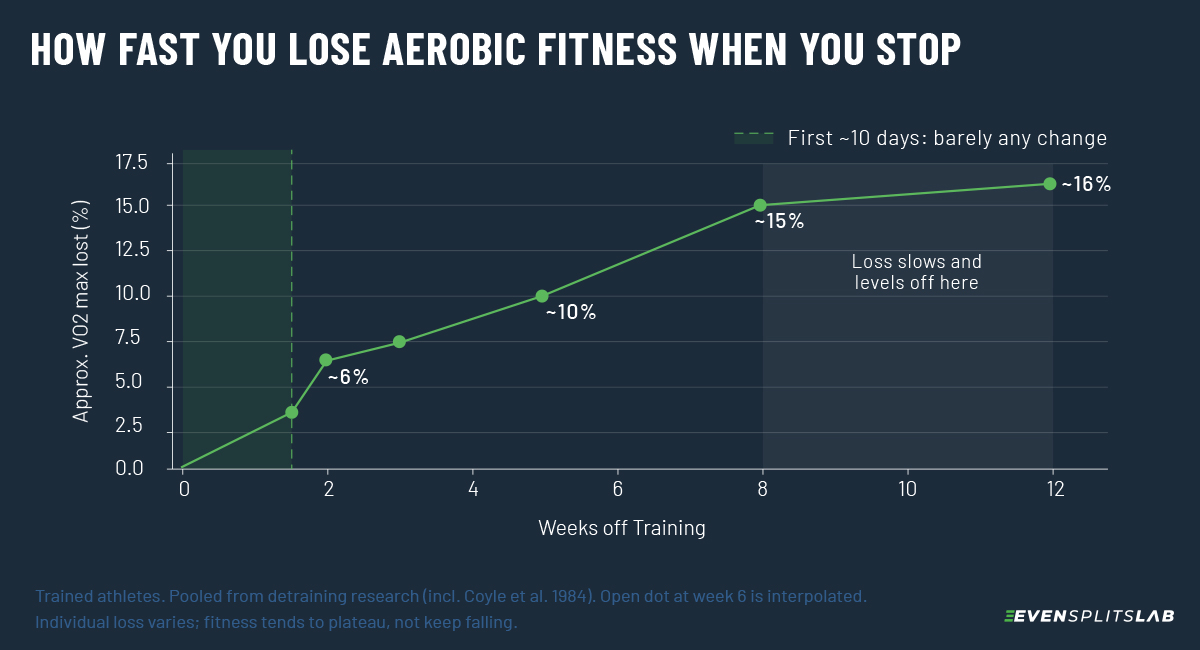
You are not losing as much as you think. For a reasonably trained athlete, the first 10 days off barely move the needle on aerobic fitness. After about two weeks of doing nothing, most people drop around 6% of their VO2 max. Push the break out to two to four weeks and well-trained athletes tend to lose somewhere in the 4 to 14% range. That is not nothing, but it is a long way from back to square one.
And here is the part that should take real pressure off: the loss does not keep falling forever. For trained athletes it tends to flatten out around the eight-week mark at roughly 15% down, and then it mostly stops. Even after three months off, you are still fitter than someone who never trained. You drift toward the couch version of yourself, but you never actually get there.
Most of the awful feeling in week one is not lost fitness at all. Your blood volume dips, your legs feel heavy, and your first session back feels embarrassingly slow. That is your body resetting, not your fitness leaving. If you want the longer version of why those first efforts feel so rough, that is the same mechanism behind why your heart rate runs high on easy runs.
Beginners are the one group that loses fitness a bit faster, because there is less base to fall back on. Even then, the absolute drop is small. The detraining research here is pretty consistent across studies, and it usually surprises people in a good way.
The base you built is doing the heavy lifting
This is the bit that makes consistency feel worth it. The longer and more steadily you have trained, the more fitness you hold during time off. Years of aerobic base raises your floor, so even after a layoff you are still well above where you started. Someone three weeks into a couch-to-5K loses their gains quickly. Someone who has trained for years does not.
Strength and pure speed also hang around longer than endurance does. Your aerobic engine is the first thing to fade and the first thing to rebuild, while the strength you have built sticks for several weeks. So even on a bad week stuck on the couch, you are not the blank slate your brain is telling you about.
Train around the injury, not through it
This is the whole game, and the wording matters. Training around the injury means picking things that do not load the hurt tissue. Training through it means ignoring pain and hoping. The first keeps your fitness. The second usually costs you weeks.
The right substitute depends on what is hurt, but the rule of thumb is simple: if a movement does not provoke the injury, it is probably fair game. If it does, it is not. Here are the usual options, roughly from most to least useful for a runner.
Aqua jogging (pool running)

The best like-for-like swap for runners. You wear a flotation belt in the deep end and run without your feet ever touching the bottom, so the impact is zero. That makes it safe for most lower-body injuries, including stress fractures, and it copies the running motion closely enough to hold your aerobic fitness for four to six weeks. It looks deeply silly. It works anyway. The main exception is a hip flexor problem, which the water resistance tends to aggravate. One catch: your heart rate runs lower in the water, so aimless laps will not cut it. Build in intervals or it becomes a float, not a session.
Cycling
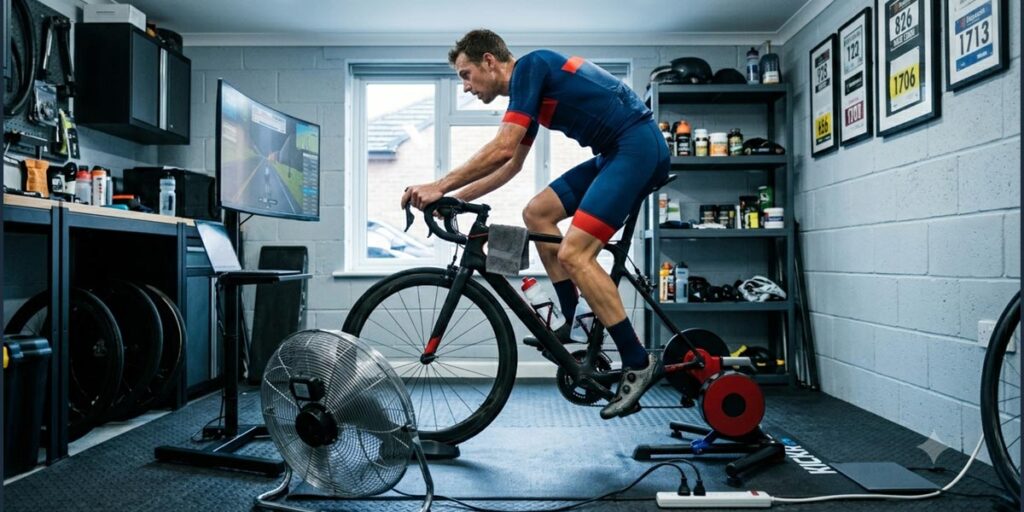
Once a foot or ankle is cleared to bear load, the bike is the easiest aerobic substitute there is. Low impact, you can go long, and an indoor trainer takes balance and road risk out of the equation while you are compromised. It suits impact-related niggles that the smooth pedal stroke does not provoke. It is less useful if the sore spot is the knee itself, or anything that complains under repeated flexion, so test gently before you commit to an hour.
Swimming
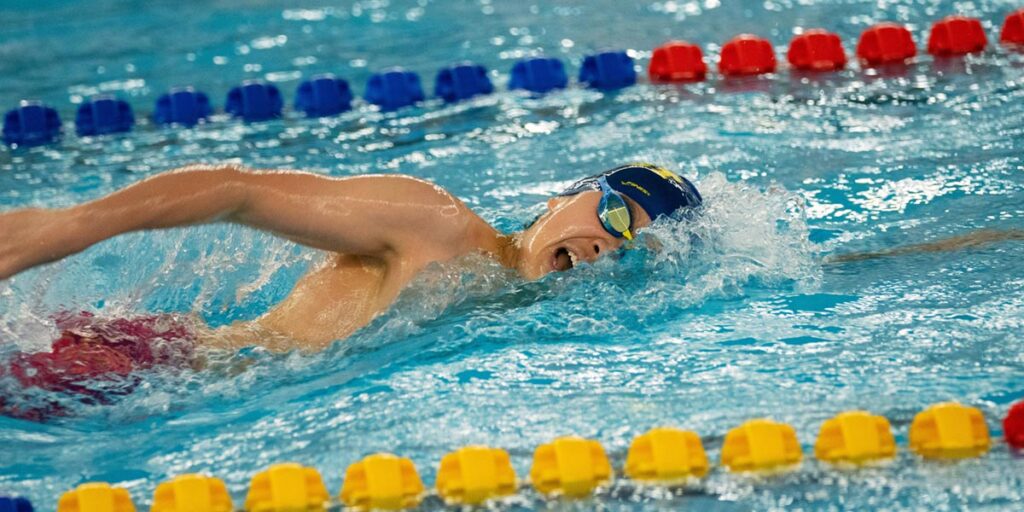
Fully non-weight-bearing, which makes it a solid aerobic option for most lower-body injuries. You keep the engine ticking over without loading anything below the waist. The obvious caveat is the other end of the body: a shoulder, neck, or lower-back injury makes swimming the wrong call. A pull buoy can take the legs out of it if those are the parts you are protecting.
The elliptical or cross-trainer

A decent middle ground for when you can bear weight but not pound the ground. The motion sits closer to running than cycling does, minus the impact, so it carries over reasonably well. It is not magic, and it bores most people senseless, but it is a low-risk way to keep your aerobic volume up when the pool and the bike are off the table.
Strength work for everything that does not hurt

An injury rarely takes out your whole body. You can almost always train the uninjured leg, your upper body, and your trunk. Single-leg work on the good side keeps it strong and stops the left-right imbalance from widening while you wait. None of this replaces aerobic training, but maintained strength means less to rebuild later, and it keeps you in the rhythm of training rather than out of it.
Core and mobility

The one box almost everyone can tick. Core work, hip and ankle mobility, and basic stability drills ask very little of an injury and still keep you moving every day. They will not build your engine, but they hold the supporting cast together and, frankly, they keep you sane. The mental side of being sidelined is half the fight, and a short daily routine beats staring at your old training log.
Whatever you pick, keep the bulk of it honestly aerobic rather than turning every session into a test. The aim is to maintain, not to prove a point. If you are not sure where that effort line sits, our guide to heart rate zones and the breakdown of Zone 2 versus Zone 3 training both apply here, even in a pool.
The patience part
I do not have a clever shortcut here, and I would not trust anyone who claims one. Be patient. Do not force it. Injuries heal on their own schedule, not the one your race calendar would prefer. The single most expensive mistake is coming back too early, because re-injury does not cost you days, it costs you weeks, and that is what actually wrecks your fitness.
Let the injury, not the calendar, tell you when to load it. Pain that changes how you move is a stop sign, not a thing to push past. When you do start again, ramp up gradually rather than picking up where you left off. If you track recovery signals, our HRV training guide covers one way to read whether your body is actually ready rather than just guessing.
Where this stops being our lane
To be straight with you: ESL is not a physio. Everything here is about holding fitness, not diagnosing or treating what is wrong. If it is sharp, swelling, not improving after a couple of weeks, or you simply are not sure what you are dealing with, get it looked at by a professional. All the cross-training advice above assumes you have the all-clear to do it. Hold your fitness, yes, but not at the cost of the thing that is actually injured.
Sources
- Firstbeat / Garmin: how long it takes to lose your fitness
- TrainingPeaks: the concept of detraining
- RunnersConnect: aqua jogging research for injured runners
Related posts
- Working back to honest easy efforts after time off: Why Is My Heart Rate So High on Easy Runs?
- Reading recovery before you load up again: HRV Training Guide for Endurance Athletes
- Keeping cross-training at the right intensity: Zone 2 vs Zone 3 Training