Ironman gets the marketing budget. T100 gets the highlight reel and the pro prize money. But some of the most legendary races in the sport happen well outside either series, and if you’ve read our breakdown of T100 vs 70.3, you already know these branded tours don’t own triathlon, they just own the marketing. Once you get past sprint and Olympic and start looking at full and half iron-distance racing, a whole world of independent, non-branded events opens up, some of them older and more prestigious than anything Ironman or T100 run. If you’ve already done a 70.3 or a full-distance race and you’re hunting for something that will actually test you, this list is for you. These are the best triathlons in the world once you take Ironman and T100 off the table.
TL;DR
The best non-Ironman, non-T100 triathlons range from a modified Olympic-distance swim off Alcatraz to full iron-distance mountain races in Norway and Scotland with real DNF risk. This list ranks six of them from easiest-to-enter to most physically brutal, with real course stats for each.
Key Takeaways
- Escape from Alcatraz and the XTERRA World Championship are shorter, but still genuinely hard to get into or finish
- Challenge Roth is full iron-distance, but the fastest and most supported course on this list
- Swissman, Celtman, and Norseman sit in the “extreme triathlon” tier: semi-supported or unsupported, iron-distance, meaningfully high DNF rates
- Most of these use a lottery or qualification system, not open registration
- None of them are Ironman or T100 branded, but several predate or directly inspired those brands
Comparison Table
| Race | Location | Format | Swim / Bike / Run | Entry method |
|---|---|---|---|---|
| Alcatraz | San Francisco, USA | Modified Olympic | 2.4 km / 29 km / 13 km | Lottery, roughly 10,000 apply for 2,000 spots |
| XTERRA Worlds | Maui, Hawaii | Off-road | 1.5 km / 30 km MTB / 10 km trail | Qualify at one of 100+ XTERRA races worldwide |
| Challenge Roth | Roth, Germany | Iron-distance | 3.8 km / 180 km / 42.2 km | Open registration, sells out in minutes |
| Swissman | Ticino to Bernese Oberland, Switzerland | Extreme iron-distance | 3.8 km / 180 km (5,500 m climbing) / 42 km | Application / lottery |
| Celtman | Torridon, Scotland | Extreme iron-distance | 3.4 km / 200 km (2,200 m) / 42 km (1,600 m) | Ballot |
| Norseman | Eidfjord, Norway | Extreme iron-distance | 3.8 km / 180 km (3,000+ m) / 42.2 km (summit finish) | Lottery, roughly 250 spots, thousands apply |
1. Escape from Alcatraz
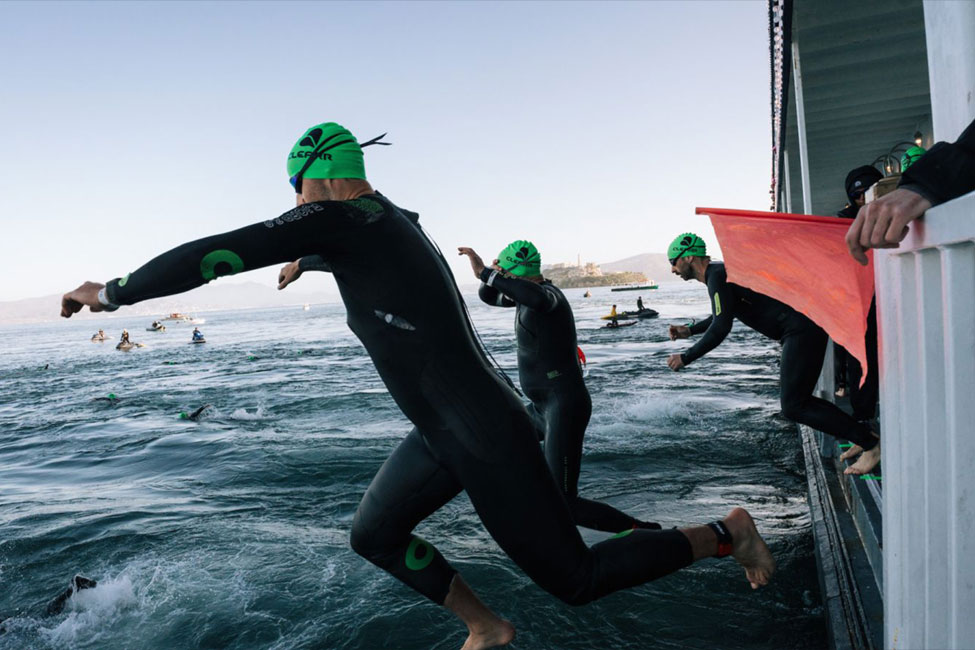
Escape from Alcatraz isn’t the hardest race on this list, but it might be the most famous. You start on a boat in San Francisco Bay, jump into water that sits around 55°F even in June, and swim 2.4 km to Marina Green. From there it’s a hilly 29 km bike through the Presidio, then a 13 km trail run that finishes with a climb up the notorious Sand Ladder. It’s a modified format rather than a standard Olympic-distance race, and that’s part of the appeal. This race does its own thing.
Getting in is arguably harder than finishing. IMG runs the event as a lottery, and roughly 10,000 people apply every year for around 2,000 spots. Some slots go to athletes who qualify through other races or finished well the year before, but most people are just hoping their name gets pulled. That scarcity is a big part of the reputation. It sells out fast, and everyone who lines up on that boat already feels like they’ve won something before the swim even starts.
Why it’s worth it
- The swim start is genuinely unlike anything else in the sport, you’re jumping off a boat near a former federal prison
- Short enough to be approachable for a strong Olympic-distance athlete, not just iron-distance veterans
- The course runs through some of the most scenic parts of San Francisco, the Presidio and Baker Beach included
2. XTERRA World Championship
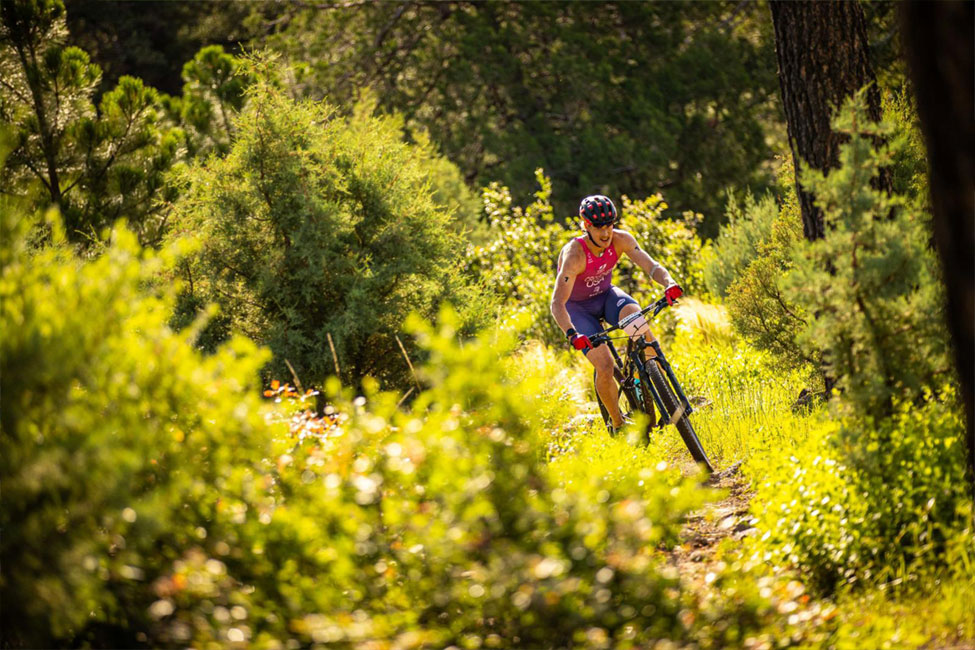
If Escape from Alcatraz is about the swim, XTERRA World Championship is about everything after it. Held every fall on Maui’s northwest coast, this is off-road triathlon at its highest level: a 1.5 km rough-water swim, a technical mountain bike through the West Maui Mountains with roughly 900 metres of climbing, and a trail run that finishes through beach sand. This isn’t a road bike with knobby tires strapped on for the day. Riders need real mountain bike skills, and the run rewards people who can handle uneven footing at speed.
XTERRA is the second-oldest triathlon world championship in the sport, behind only Kona, and it’s been run on Maui since 1996. Getting there means qualifying at one of more than 100 XTERRA races held worldwide over the season, so there’s a built-in structure to working toward it that a lot of the other races on this list don’t have. It’s also just a different kind of hard. You’re not managing seven hours in aero position, you’re navigating roots, rock gardens, and a mountain that doesn’t care how fit your cardio is.
Why it’s worth it
- A genuinely different skill set than road triathlon, worth trying even once if you’ve only raced pavement
- Course conditions shift year to year, so no two editions feel identical
- The community around off-road triathlon skews lower-key than the road racing circuit
3. Challenge Roth
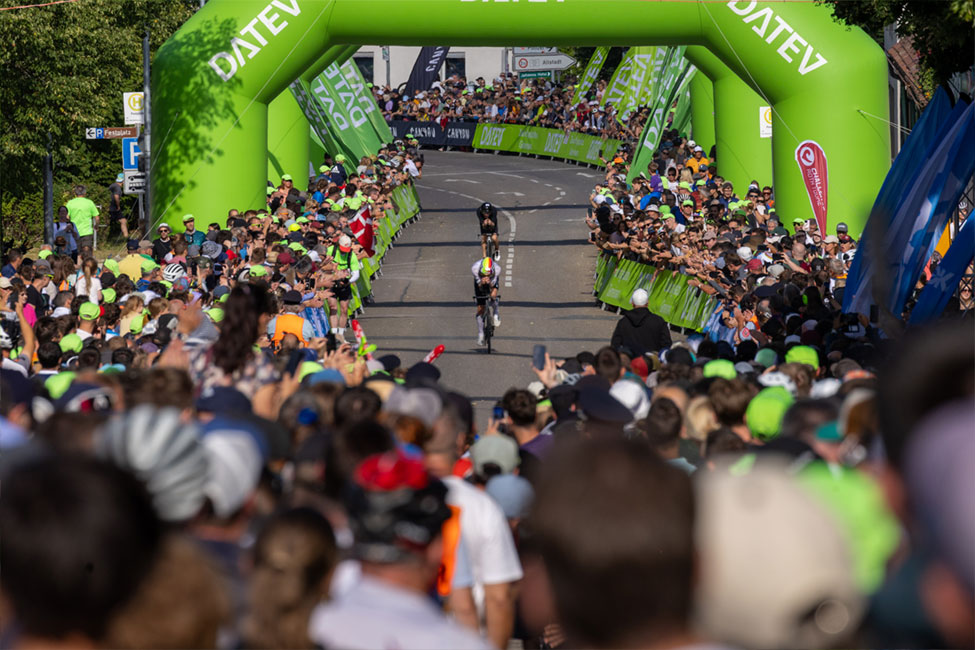
Challenge Roth is where this list stops being about novelty and starts being about full iron-distance racing. The race is held every July in the small Bavarian town of Roth, Germany, and it’s been running since 1984. For over a decade it actually was Ironman Germany, before the Walchshofer family split from WTC in 2002 and kept running it independently under the Challenge Family banner. This isn’t a scrappy alternative to Ironman, it’s arguably where iron-distance triathlon in Europe grew up.
What makes Roth worth the trip is the atmosphere. Somewhere around 250,000 spectators line the course, roughly a quarter of the town volunteers to make it happen, and the climb up Solarer Berg has become one of the genuine spectacles in the sport. The crowd is so loud you hear it before you see it. It’s also fast. Jan Frodeno set the current men’s iron-distance world record here in 2016, at 7:35:39, and the women’s record has been broken multiple times on this exact course.
The catch is getting in. Registration typically opens once a year and sells out in minutes, sometimes seconds. If a guaranteed spot matters more than saving money, most people go through a tour operator that bundles entry with accommodation, which removes the stress of refreshing a browser at 7 a.m. German time.
Why it’s worth it
- The single most spectator-heavy triathlon on this list, by a wide margin
- Fast, well-marshalled course if a personal best is part of the goal
- Deep history, one of the races that shaped what long-course triathlon looks like today
4. Swissman Xtreme Triathlon
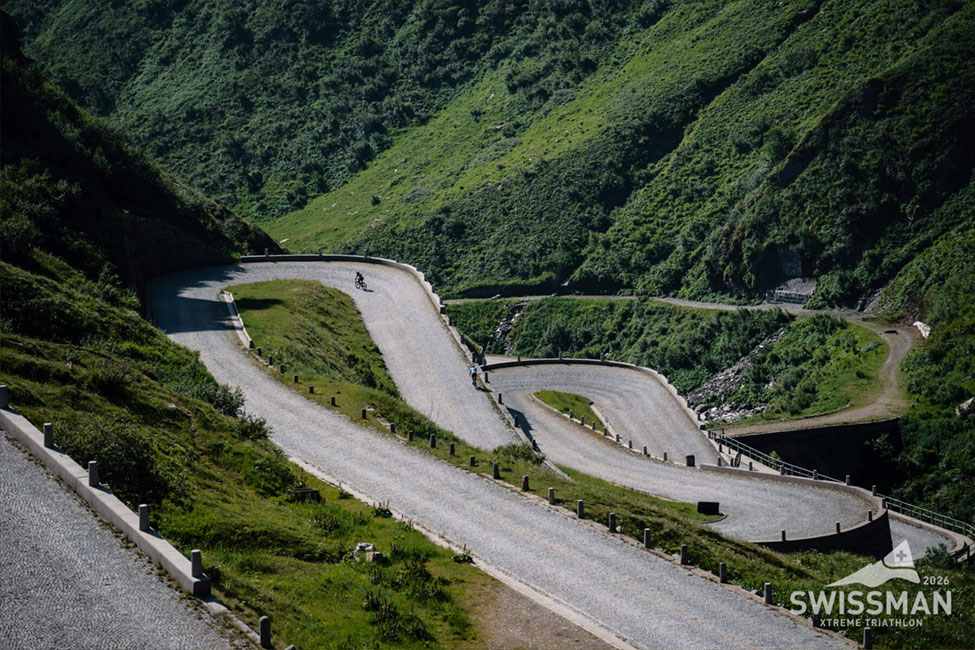
This is where the list turns a corner. Swissman is a full iron-distance race that starts with a 3.8 km swim in Lake Maggiore, near the Isole di Brissago in the Ticino region, then sends riders over three Alpine passes on the way north into the Bernese Oberland. Total climbing on the bike and run combined comes to around 5,500 metres. For context, that’s more vertical gain than most people log in a full week of training.
The run finishes with a climb to Kleine Scheidegg, right at the foot of the Eiger, Mönch, and Jungfrau, and athletes are required to finish that last stretch with their support crew alongside them. It’s part safety measure, part tradition. Swissman was directly inspired by Norseman, and it belongs to the same XTRI World Tour of extreme long-course races. If some of that terminology is new, our triathlon terms guide breaks down what XTRI and a few of these other labels actually mean.
Why it’s worth it
- Genuinely one of the most scenic courses in triathlon, glaciers and alpine passes for 180 km
- Small field size keeps the experience intimate compared to a race like Roth
- A serious mountain test for anyone who has already done a flat iron-distance course and wants to know what altitude changes
5. Celtman
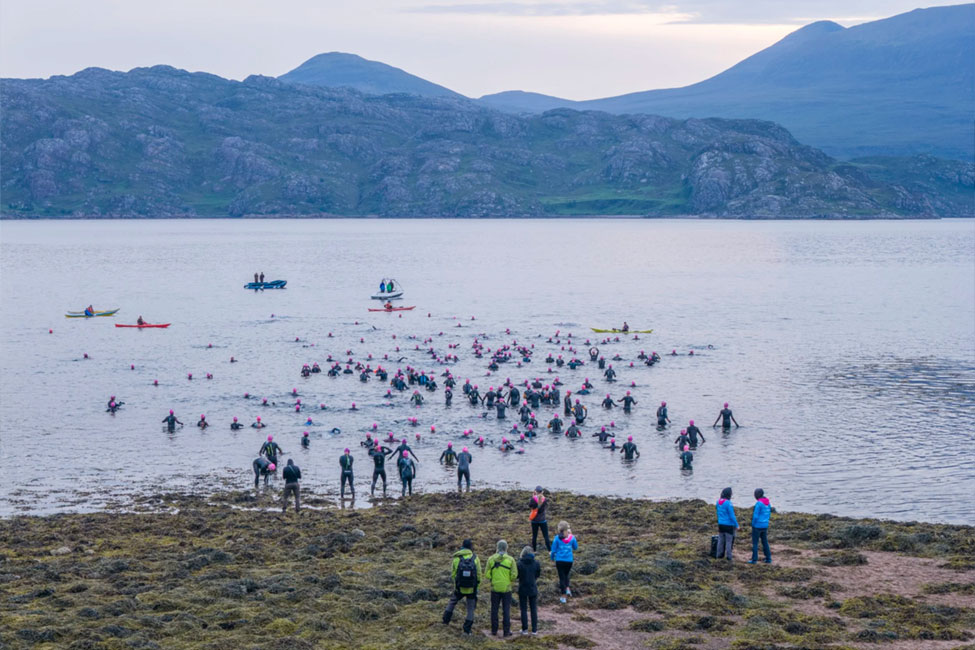
Celtman takes the extreme-triathlon format and adds Scottish weather to it. The race is based in Torridon, in the Northwest Highlands, and starts with a 3.4 km swim in Loch Shieldaig, sea water that sits around 10 to 12°C even in June and comes with a standing jellyfish population. From there it’s 200 km of exposed, often windy Highland roads on the bike, then a 42 km run that finishes over two Munros, Scottish mountains over 3,000 feet, on the Beinn Eighe range.
The honest version of this race’s reputation: DNF rates run high, and organizers aren’t shy about saying so. Weather can shift from manageable to genuinely dangerous within a few hours, and the final mountain section has forced plenty of strong athletes to call it. Finishers are split into two tiers based on which route they complete, with the colour of t-shirt they earn depending on which one. It sounds like a small detail until you’ve watched people fight for eleven-plus hours to earn it.
Why it’s worth it
- One of the most dramatic landscapes in triathlon, the Torridon mountains aren’t like anywhere else on this list
- Small, close-knit field, this isn’t a race that ever feels crowded
- A genuine test of weather management and mental toughness, not just fitness
6. Norseman Xtreme Triathlon
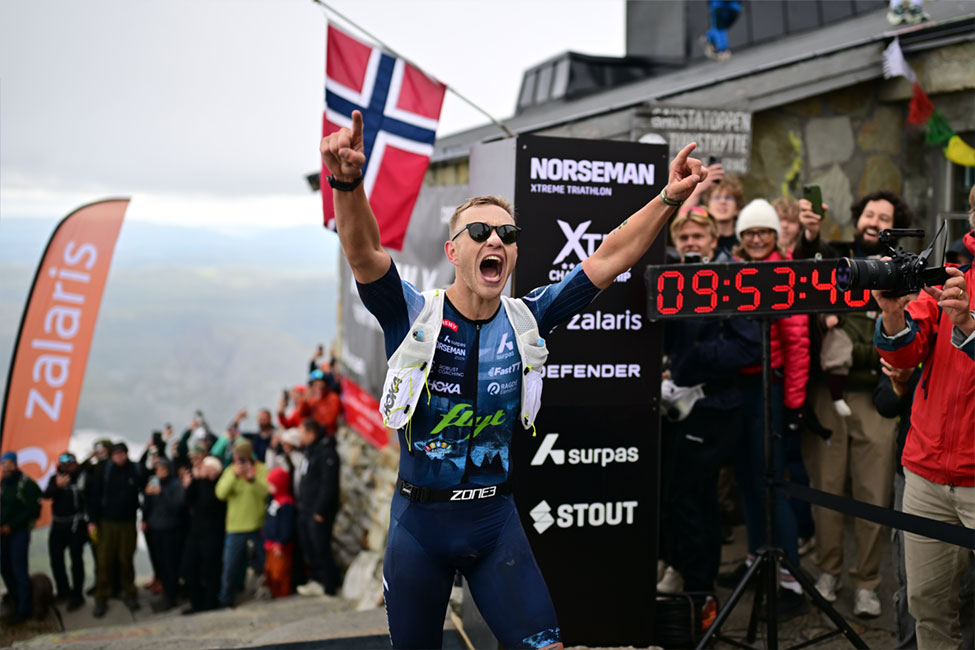
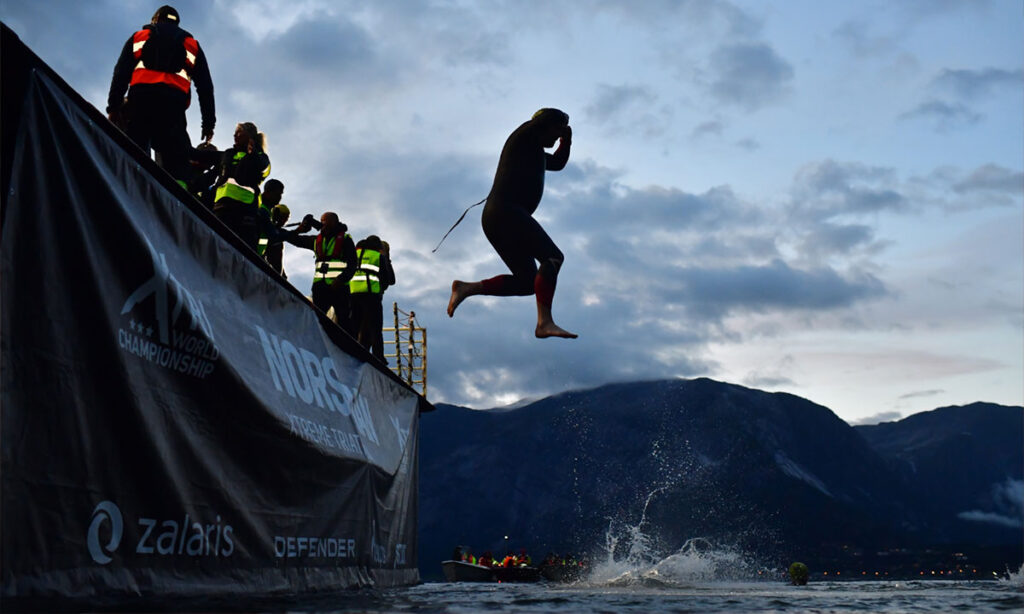
Norseman closes this list because it’s the race the rest of the extreme-triathlon genre gets measured against. It started in 2003 in Eidfjord, Norway, and the format is simple to describe and brutal to execute: jump off a car ferry into the Hardangerfjord for a 3.8 km swim, cycle 180 km through the Hardangervidda mountain plateau with the first 40 km almost entirely uphill, then run a full marathon that ends with a climb up Gaustatoppen, finishing at 1,850 metres above sea level.
It’s also unsupported. Athletes are required to bring their own crew, who follow by car with food and gear and are required to accompany their athlete up the final mountain climb for safety. Only around 250 spots are available each year, split between Norwegian and international entrants, and demand regularly runs into the thousands of applicants. Not every finisher gets the same recognition either. The fastest finishers who summit within the cutoff earn the black t-shirt, everyone else gets a different colour. It’s a small detail that says a lot about how this race treats the idea of finishing.
Why it’s worth it
- The original extreme triathlon, everything else on this list either predates it slightly or was directly inspired by it
- Genuinely spectacular scenery, fjord to mountain summit in one day
- The unsupported format forces a level of logistics and crew planning most triathletes never have to think about
Where to go from here
That’s six races, and honestly, none of them belong on a first-timer’s calendar. Every one of these assumes you’ve already got a 70.3 or a full-distance finish behind you and you’re looking for something that changes the equation: altitude, cold water, technical terrain, or just the fact that almost nobody gets in. Pick based on what actually makes you a little nervous. That’s usually the right answer.