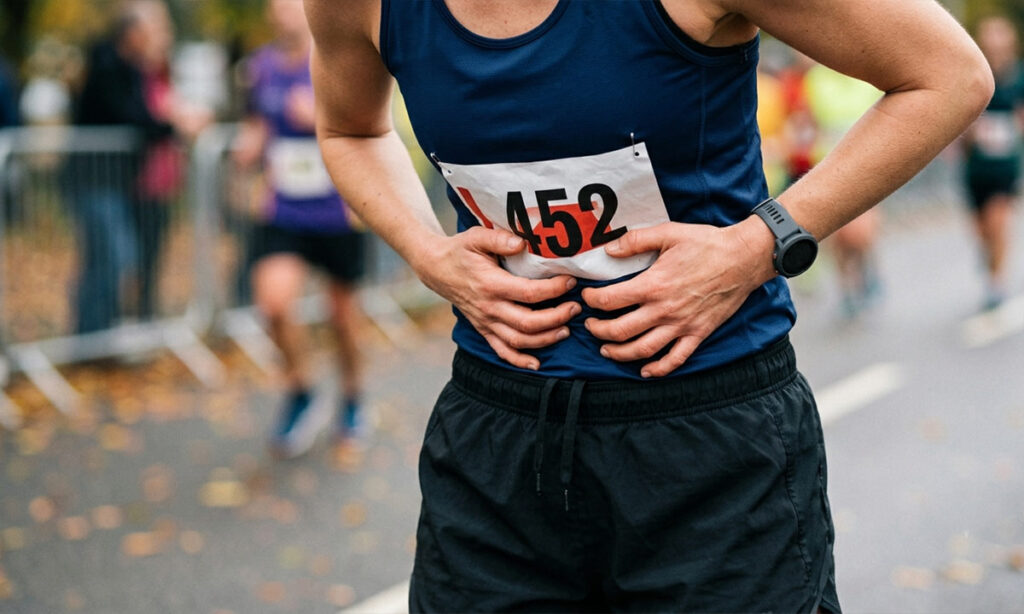
Nothing ends a good run faster than a sudden negotiation with your gut about whether you are going to make it home. It happens to beginners on their first long run and to experienced marathoners on race morning, which is the annoying part. Fitness does not protect you. Most runners assume it is random, decide they simply have a bad stomach, and quietly train around it for years. It usually is not random, and stomach issues during a run almost always trace back to a short list of fixable inputs.
TL;DR: Most stomach issues during a run come down to three things: what went in beforehand, how concentrated your fuel is, and how much blood your gut is actually getting while you run. The gut adapts to training the same way your legs do. What separates a quick fix from three months of guessing is the order you troubleshoot in.
Key Takeaways
- Running cuts blood flow to the digestive system sharply during hard efforts. Everything else stacks on top of that.
- The most common fixable causes are pre-run food timing, fibre and fat, and fuel that is too concentrated for the water going with it.
- The gut is trainable. A couple of weeks of structured carbohydrate feeding in training measurably reduces gut discomfort.
- Dehydration makes all of it worse. Starting a run already down on fluid is one of the fastest ways to trigger symptoms.
- Taking ibuprofen before a run is a bad idea for reasons that have nothing to do with your knees.
Why running is harder on your gut than any other sport
Running is the worst offender in endurance sport, and three separate problems stack on top of each other.
The first is blood flow. When you run, your body sends blood toward working muscle and skin, and the gut gets whatever is left over. Blood flow to the gut and liver drops by roughly 20 percent within ten minutes of steady running, and by as much as 80 percent after an hour at a decent clip. A digestive system running on a fraction of its normal blood supply does not absorb well, does not move things along normally, and gets irritable.
The second is mechanical. Running shakes the contents of your digestive tract in a way that cycling and swimming simply do not. That is a big part of why “runner’s trots” is a running term.
The third is what you put in it. Fibre, fat, protein, and concentrated carbohydrate solutions all raise the risk of symptoms, and their effect gets amplified once blood flow drops.
Prevalence swings depending on the event, but roughly a third to two thirds of endurance athletes report at least one gut symptom, and ultra events run higher. If this is happening to you, you are not unusual. You are just not pulling the right lever yet.
One clarification first, because these two get mixed together constantly. Stomach cramps and muscle cramps are different problems with different causes, and the difference between bonking and cramping is worth being clear on before you start changing your fuelling. If your calves are seizing up, that is not a gut issue, and no amount of gel tinkering will fix it.
Upper and lower symptoms point in different directions
Upper symptoms are nausea, reflux, burping, and that heavy full feeling. These usually point at gastric emptying: too much, too concentrated, or too close to the run.
Lower symptoms are cramping, gas, urgency, and loose stool. These usually point at what is left sitting in the intestine: fibre residue, poorly absorbed sugars, and fluid being pulled into the gut instead of out of it.
The same trigger can produce both. But knowing which end is complaining tells you which fix to try first.
Start with the pre-run meal
This is the cheapest fix available and most people skip straight past it on the way to buying a new gel.
Timing. A full meal usually needs two to three hours before a hard run. Something small, a banana or a slice of toast, can go in 30 to 60 minutes out. The exact numbers are personal, but the principle is not: food still sitting in the stomach when blood flow drops is food that is not going anywhere good.
Composition. Fat and protein slow gastric emptying. Fibre leaves residue that has to go somewhere. Neither is bad for you, they are just badly timed. The high-fibre oat bowl that makes you feel virtuous at 6am is doing you no favours at 7am.
FODMAPs. These are short-chain carbohydrates that a lot of people absorb poorly: fructans in wheat and onion, lactose in dairy, sorbitol in sugar-free gum and some sports products. They pull water into the intestine and get fermented by gut bacteria, which is roughly the last thing you want happening at kilometre 25. Short-term low-FODMAP trials in runners with persistent symptoms improved day-to-day gut symptoms, though the effect during the run itself has been less consistent. Treat it as a three to six day experiment before a key session, not a permanent way of eating.
If you are building a pre-race routine from scratch, the timing side is worth getting right first. Our guide to what to eat before your first sprint triathlon covers what goes in and when.
Your fuel is probably too concentrated
This is where a lot of otherwise sensible runners come unstuck.
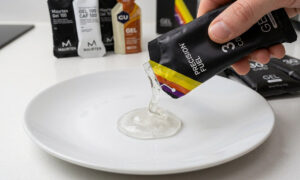
A gel is not a small drink. It is a concentrated dose of carbohydrate that needs water before your gut can do anything useful with it. Wash a gel down with a sports drink and you have just doubled the carbohydrate concentration in your stomach without adding any of the water it was asking for. Plain water, every time.
Concentration drives both gastric emptying and osmotic load. The more carbohydrate in what you drink, the slower your stomach empties. And a solution that is too concentrated pulls water into the intestine rather than letting it move out, which is the mechanism behind that sloshing, bloated, urgent feeling in the back half of a long run. General guidance sits around 6 percent carbohydrate for glucose-only drinks and 8 to 10 percent when glucose is combined with fructose.
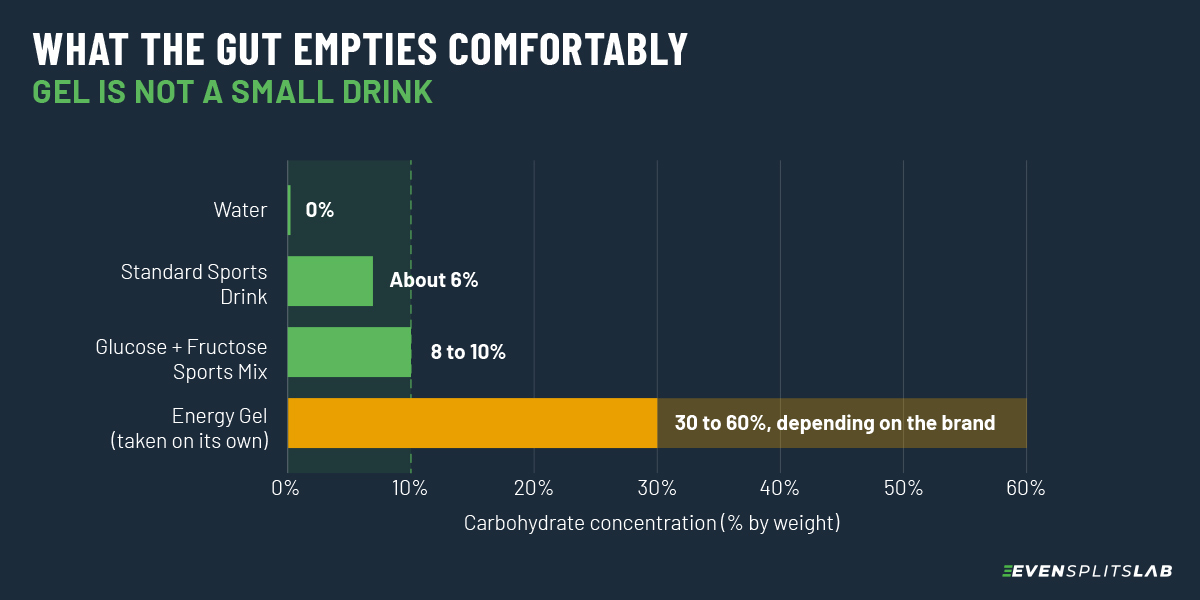
That combination matters. Glucose and fructose use separate transporters to cross the gut wall, so mixing them lets you take in more carbohydrate per hour with less of it left sitting around unabsorbed. Most modern gels are built around that ratio, though the amounts and the extras vary more than the packaging suggests. We compared the 10 best energy gels for runners and cyclists if you want to see what is actually in the popular ones.
Two things to watch for on labels. Sugar alcohols first: sorbitol, maltitol, mannitol. Common in bars and chews, poorly absorbed, and reliably laxative in the quantities people eat them during a race. Stacking second: a gel, a bottle of sports drink, and a handful of chews at the same aid station is three carbohydrate sources arriving at once. Your gut does not care that they came from different packets.
Train your gut the way you train your legs
The gut adapts. That is not a motivational metaphor, it shows up in the data.
Repeated carbohydrate feeding during exercise has been shown to cut gut discomfort by around 47 percent over a two-week protocol, and carbohydrate malabsorption by 45 to 54 percent. The limits are worth stating: markers of gut permeability and gastric emptying have not shifted consistently in the same research, so the mechanism is not settled. The outcome you care about, feeling less awful while fuelling, does hold up.
A practical version looks like this. Start six to eight weeks out from your goal race. Begin at roughly 30 g of carbohydrate per hour in long runs. Add 10 to 15 g per hour every week or two until you reach your race target. Use the exact products you plan to race with, and take them at race intensity rather than on a gentle shuffle. Your gut behaves very differently at 80 percent effort than it does at conversational pace, and testing a fuelling plan only on easy runs is how people end up surprised on race morning.
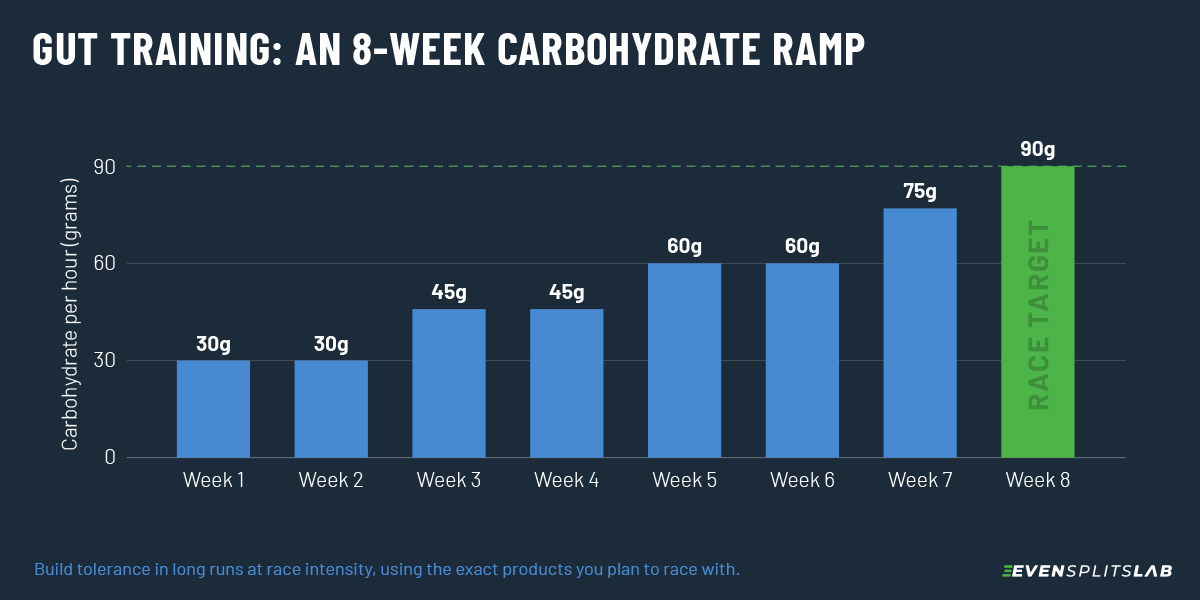
If you do not know what your target should be, Our Fuel Calculator will give you a number based on your body weight and how long you will be out there. A target is the only thing you can actually train against.
Hydration is a gut problem, not just a performance one
Dehydration is one of the most reliable ways to make gut symptoms worse, and it is easy to miss because the food usually takes the blame.
Less fluid means less plasma volume, which means even less blood reaching a gut that is already at the back of the queue. Gastric emptying also slows when you are dehydrated, so fuel taken in late in a race sits there longer than it should. Runners who finish heavily dehydrated report gut complaints at much higher rates, which is not a coincidence.
Sodium plays a role here, but not the one it usually gets sold on. Sodium helps you hold onto the fluid you drink and supports the absorption of water and glucose across the gut wall. It is not a cramp prevention strategy, and treating it as one is how people end up over-salting and feeling worse. How much sodium you actually need during a race gets into the numbers, and Our Sweat Rate Calculator will tell you what you are really losing.
Heat compounds all of it. A higher core temperature reduces gut blood flow further, which is why a fuelling plan that felt bulletproof in October falls apart in July. If you have a summer race on the calendar, adjusting your nutrition plan for hot weather racing is the next thing to read.
The things that quietly make it worse
Ibuprofen. In a controlled trial, athletes who took it before exercise showed more small intestinal cell damage and worse gut barrier function than the same athletes exercising without it. Two doses were enough. The damage was reversible, but the practical point stands: an anti-inflammatory before a hard effort makes an already compromised gut more compromised. Taking ibuprofen before a marathon to get ahead of knee pain is a bad trade.
Caffeine. Highly individual. It speeds up gut motility in some people, which is fine on a Tuesday and considerably less fine at kilometre 30. If you have always had coffee before a run and never had a problem, carry on. If you have a problem, this is a cheap variable to test.
Nerves. Pre-race adrenaline affects gut motility directly, and that is the honest explanation for a good number of “it only happens in races” cases. It also means the fix might not be nutritional at all. Rehearse the fuelling plan anyway, so you can rule it out properly.
New products on race day. Everybody knows this rule. Everybody breaks it, usually because the aid station gel was free.
One thing that gets lumped in here and should not be: a side stitch. That sharp pain under the ribs is not a digestive problem in the usual sense, and rebuilding your gel strategy will not fix it.
Fix it in this order
Change one variable at a time, and give it two or three sessions before you decide. Changing four things at once and feeling better tells you nothing about what worked.
| Symptom | Change this first | If that does not work |
|---|---|---|
| Nausea | Dilute your fuel. Take gels with plain water, never with a sports drink. | Cut carbs per hour by a third, then rebuild slowly with a gut training block. |
| Bloating | Check labels for sugar alcohols and high-FODMAP ingredients. | Trial a low-FODMAP approach for three to six days before key sessions. |
| Urgency | Cut fibre and dairy in the 24 hours before a hard run. Fix your pre-run timing. | Look at total carbohydrate concentration and hydration status. |
| Race day only | Practise the exact race fuelling at race intensity, not just on easy runs. | Assume nerves are part of it, and stop taking new products at aid stations. |
| Heat | Start hydrated. Add sodium to your drink so you hold onto the fluid you take in. | Lower your carbohydrate concentration. Heat and concentration compound. |
Before you change your gels, check whether you are simply taking in more carbohydrate than your gut has ever been asked to handle. Our Fuel Calculator will give you a target based on your weight and race duration, and a target is the only thing you can actually train against.
Q&A
Do probiotics help?
The evidence does not support them for this. Reviews of probiotic supplementation in endurance athletes have not found consistent effects on gut barrier function, inflammation, or symptoms. That does not mean they do nothing for anyone, ever. It means they are not the fix, and the money is better spent rehearsing your fuelling.
Can you take an anti-diarrheal before a race?
Some ultrarunners do. It is worth being clear about what that is: symptom suppression, not a solution. It does nothing about blood flow, fuel concentration, or what you ate the night before, and it has not been well studied in athletes mid-effort. If you have reached the point of considering it, that is a conversation for a doctor rather than a race forum.
When is this not a fuelling problem?
Blood in the stool, symptoms that show up when you are not exercising, unexplained weight loss, or problems that persist no matter what you change. Any of those, stop troubleshooting your gels and go see a doctor. Conditions like IBS and coeliac disease exist, and they do not get solved with a better hydration plan.
Related Posts
Not sure whether the problem is your gut, your fuel, or your legs? Read: The Difference Between Bonking and Cramping (And How to Fix Both).
Deciding what to actually carry: The 10 Best Energy Gels for Runners and Cyclists: Compared, Ranked, and Actually Tested.
Racing somewhere hot this season? Read: Hot Weather Racing: Adjusting Your Nutrition Plan.
Sources / References
- de Oliveira, E.P., Burini, R.C. & Jeukendrup, A. (2014). Gastrointestinal Complaints During Exercise: Prevalence, Etiology, and Nutritional Recommendations. Sports Medicine, 44(S1). https://www.ncbi.nlm.nih.gov/pmc/articles/PMC4008808/
- Martinez, I.G. et al. (2023). The Effect of Gut-Training and Feeding-Challenge on Markers of Gastrointestinal Status in Response to Endurance Exercise: A Systematic Literature Review. Sports Medicine. https://www.ncbi.nlm.nih.gov/pmc/articles/PMC10185635/
- van Wijck, K. et al. (2012). Aggravation of Exercise-Induced Intestinal Injury by Ibuprofen in Athletes. Medicine & Science in Sports & Exercise, 44(12). https://pubmed.ncbi.nlm.nih.gov/22776871/
- Lis, D.M. et al. (2018). Low FODMAP: A Preliminary Strategy to Reduce Gastrointestinal Distress in Athletes. Medicine & Science in Sports & Exercise, 50(1). https://pubmed.ncbi.nlm.nih.gov/28891900/