Carbon plate running shoes have taken over race start lines. You see them on elite runners, age groupers, and, increasingly, people at their first 5K. The technology is real: the stiff plate and bouncy foam work together to return energy and keep your turnover high. The question is whether any of that translates into something meaningful if you’re a recreational runner who just wants to finish strong. If you’re a beginner or mid-pack runner shopping for your next race shoe, here’s what to actually know about carbon plate shoes for beginners.
TL;DR: Carbon plate shoes can help recreational athletes, but the case is narrow. They make the most sense if you care about race performance and already have a solid running base. If you’re planning to run slow, still building fitness, or coming back from an injury, skip them. There are better options for the money.
Key Takeaways
- Carbon plate shoes are designed for performance, not comfort or durability.
- They can nudge cadence higher without you having to think about it.
- The energy return benefit is real, but it’s smaller for slower paces.
- Several injury conditions make them a bad idea, including active Achilles issues and plantar fasciitis.
- A good plated-foam trainer (without the carbon) often hits a better value point for most recreational runners.
What Carbon Plate Shoes Actually Do
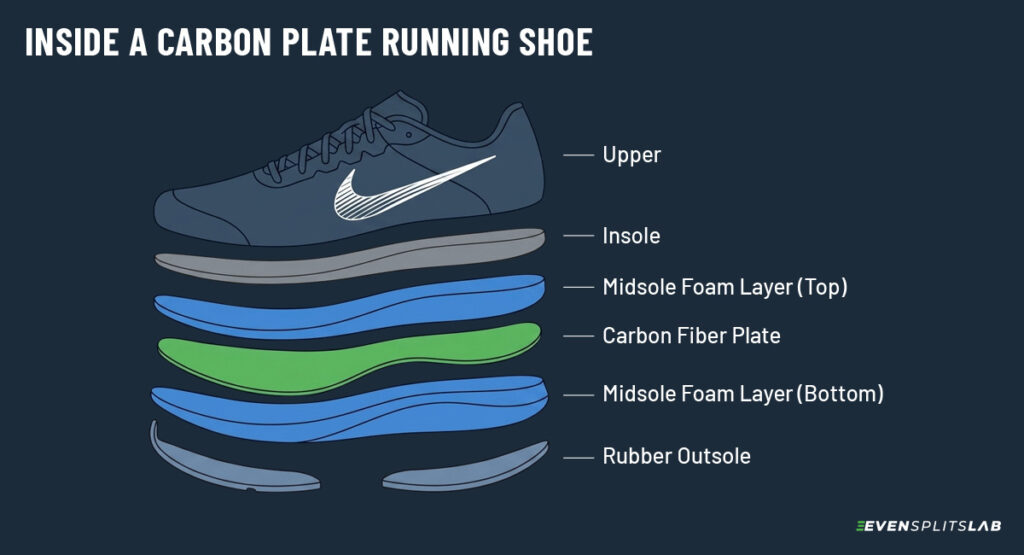
The basic idea is a stiff carbon fibre plate embedded in the midsole, paired with a thick layer of lightweight, responsive foam. The plate acts like a lever. As your foot rolls through the gait cycle, the plate loads and releases energy, which gives you a bit of forward propulsion you didn’t generate yourself.
How much propulsion? Research suggests somewhere around 2 to 4 percent improvement in running economy for well-trained runners at race pace. That’s a real number. At elite level it’s the difference between a podium and a DNF. At a 6-minute-per-kilometre pace, it’s more modest.
There’s another benefit that doesn’t get talked about as much: cadence. The plate and stack height encourage a quicker, lighter foot strike. Runners who wear them often notice their cadence creeping up without consciously trying to change it. That’s not just a speed thing. For people who tend to overstride or have a naturally slow turnover, it can shift how a run feels.
The Case for Recreational Runners
If you race, even occasionally, and you care about your result, carbon plate shoes have a real argument. Race day is the right context for them.
The way most recreational athletes get value from these shoes is by limiting their use. A short shakeout run or tempo a few days before the race, then race day itself. Save them for races and targeted fast sessions. Easy runs and cross-training don’t need them.
The durability math makes that choice easier: these shoes usually last 240 to 480 kilometres. Some models less. For a shoe that costs $250 to $350+, using them only for races and targeted sessions is the only way the cost per kilometre isn’t embarrassing.
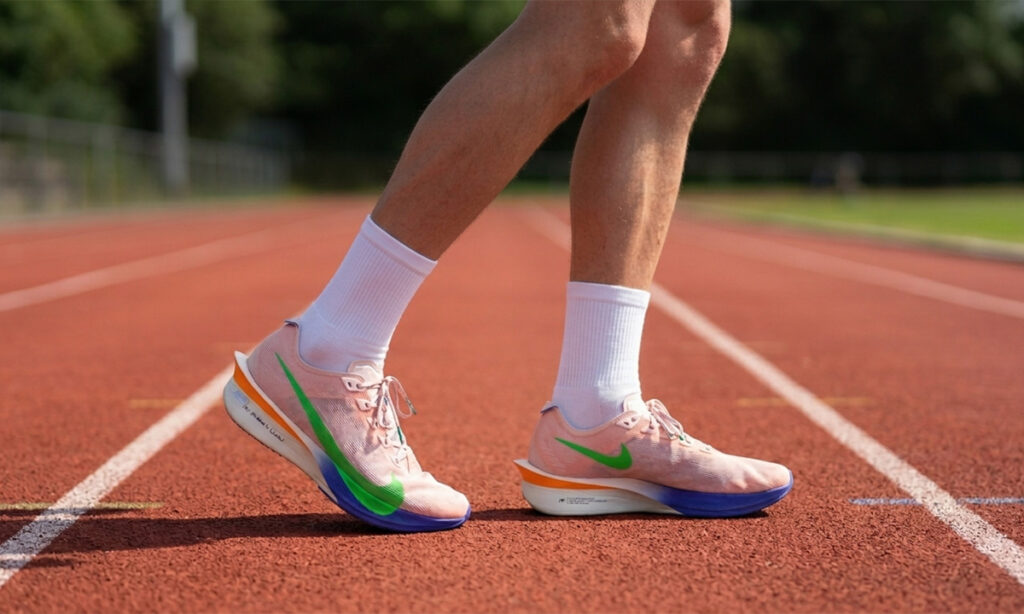
The Nike Vaporfly 4 is a good example of the category. It’s light and breathable, runs close to true to size, and the energy return is noticeable from the first kilometre. The main caveat: it’s not a heel-striker’s shoe. The geometry rewards a midfoot or forefoot strike. If you land heavily on your heel, you won’t feel the plate do its job, and the shoe will wear unevenly. For a more detailed breakdown of the Vaporfly and how it compares to similar models, Run Repeat has thorough testing data.
When Carbon Plate Shoes Don’t Make Sense
This is where it gets honest. There are a few situations where carbon plate shoes are either a waste of money or an active risk.
You’re running for fitness, not performance. If your goal is to finish, enjoy the race, or improve gradually, the marginal speed gain from a carbon plate shoe isn’t meaningful. A comfortable, well-cushioned trainer will serve you better for long-term consistency. Save the money.
Your pace is on the slower side. The energy return mechanism works best at higher cadences and faster speeds. At slower paces, you’re not loading the plate efficiently, and the stiff geometry can actually feel awkward. The shoe was engineered around a specific running style and pace range. If you’re outside it, you’re paying for a tool designed for someone else.
You’re a heel striker. Carbon plate shoes are built for forefoot and midfoot strikers. A heel-first landing bypasses the plate almost entirely. You get the weight and the price without the benefit.
Injuries That Should Make You Wait
This section isn’t meant to scare you. Carbon plate shoes don’t automatically cause injuries. But they do change how load is distributed across your foot and lower leg, and some conditions are genuinely aggravated by that shift.
Achilles tendinopathy
The stiff plate can increase stride length, which places more demand on the Achilles and calf complex. If you’re managing Achilles pain or have a history of tendinopathy, introducing a carbon plate shoe adds a new mechanical stress at exactly the wrong time. Wait until you’re fully clear.
Plantar fasciitis
The plate limits natural foot flexion and shifts load toward the forefoot. For someone with active plantar fasciitis or a history of it flaring up, that redistribution can provoke symptoms. The transition from a flexible trainer to a stiff plate is one of the more common triggers.
Metatarsal pain or stress fractures
Biomechanics research has flagged increased bending forces on the metatarsals as a potential concern with carbon plate shoes, particularly for runners new to them. The 2nd and 3rd metatarsals are most commonly affected. If you’ve had forefoot stress injuries, get medical clearance before making the switch.
Navicular stress issues
A 2024 Oregon State University study found that carbon plate shoes altered ankle motion in a way associated with navicular stress fractures. The navicular sits at the inside arch of the foot. Runners with a history of midfoot stress injuries should be cautious here.
Low calf and foot strength
Carbon plate shoes encourage a forefoot-dominant strike. If your calves and small foot muscles aren’t conditioned for that load, the transition can cause soreness, shin pain, or worse. This is especially relevant for newer runners who haven’t spent time building lower-leg strength. A slow introduction, using the shoes for short runs first, matters more than most people realise.
One useful framing: think of switching to a carbon plate shoe the same way you’d think about any change in training load. The shoe isn’t inherently dangerous, but a sudden change in footwear is a sudden change in mechanics. Giving your body time to adapt is the sensible approach.
Alternatives Worth Considering
If carbon plate shoes don’t fit your situation right now, there’s a solid middle ground: tempo trainers with highly responsive foam but no carbon plate. These shoes give you a lot of the bounce and energy return with more flexibility underfoot, better durability, and usually a lower price.
A few worth knowing:
- ASICS Superblast 2: A high-stack, lightweight shoe built for fast training days. Forgiving enough to use regularly, lively enough to feel different from a daily trainer.
- Adidas Adizero EVO SL: Lower-profile than most super trainers, with a snappy ride that suits shorter races and tempo work.
- New Balance FuelCell Rebel v5: Light and responsive with a natural feel underfoot. Good for runners who want faster-day shoes without committing to a stiff plate.
None of these are carbon plate shoes. That’s the point. They’re made for training, built to last, and will suit a wider range of runners. If you’re not sure whether your body is ready for a carbon plate, start here.
The Honest Bottom Line
Carbon plate shoes have a place in a recreational athlete’s kit. But it’s a specific place: race day and targeted fast sessions. They’re not daily trainers. They’re not beginner shoes. And they’re not a substitute for fitness.
If you race, care about your time, have a reasonably developed running base, and don’t have active lower-leg injuries, they’re worth trying. Buy one pair, use it carefully, and see what happens.
If you’re still building your base, recovering from an injury, or just want to run comfortably, spend that money on something more versatile. The carbon plate will still be there when you’re ready for it.
If you’re working on race day preparation, these posts are worth reading: What to Eat Before Your First Sprint Triathlon, Triathlon Gear on a Budget, and Transition Tips: How to Save 5 Minutes Without Training Harder.
FAQ
You can, but most people shouldn’t. Using carbon plate shoes for easy or recovery runs doesn’t add any benefit, and doing it regularly can actually slow the development of foot and lower-leg strength. Most coaches and podiatrists recommend saving them for race day and targeted fast sessions. That also stretches the lifespan considerably, since they wear out quickly.
Usually 240 to 480 km (roughly 150 to 300 miles), depending on the model and how often you run in them. That’s noticeably shorter than a standard trainer. The foam is the limiting factor: it compresses over time and loses responsiveness before the outsole looks worn out. If you use them only for races and a couple of sessions beforehand, a single pair can stretch considerably further. If you run in them regularly, expect to replace them sooner than you’d expect for the price.
Probably a little, but not by much. The plate and foam are most effective at higher cadences and faster paces, which is how the shoe was designed. At slower speeds you’re not loading the system efficiently, so the energy return is smaller. You might still feel the cadence nudge, but the performance gain that justifies the price becomes harder to make a case for.
The shoe itself doesn’t need breaking in the way a leather boot does. But your body does. The change in geometry, stack height, and stiffness is a real mechanical shift, and running in them for the first time on race day is a bad idea. One or two short runs beforehand, at race pace or close to it, is usually enough to know how your calves and feet respond before it actually matters.
Sources:
- Fueled by Lolz: Do Carbon Plated Running Shoes Cause Injuries? (December 2025) — fueledbylolz.substack.com
- PMC: Biomechanical Effects of Advanced Running Shoes Review (2025) — pmc.ncbi.nlm.nih.gov/articles/PMC11850346/
- Run Repeat: Nike Vaporfly 4 Review — runrepeat.com