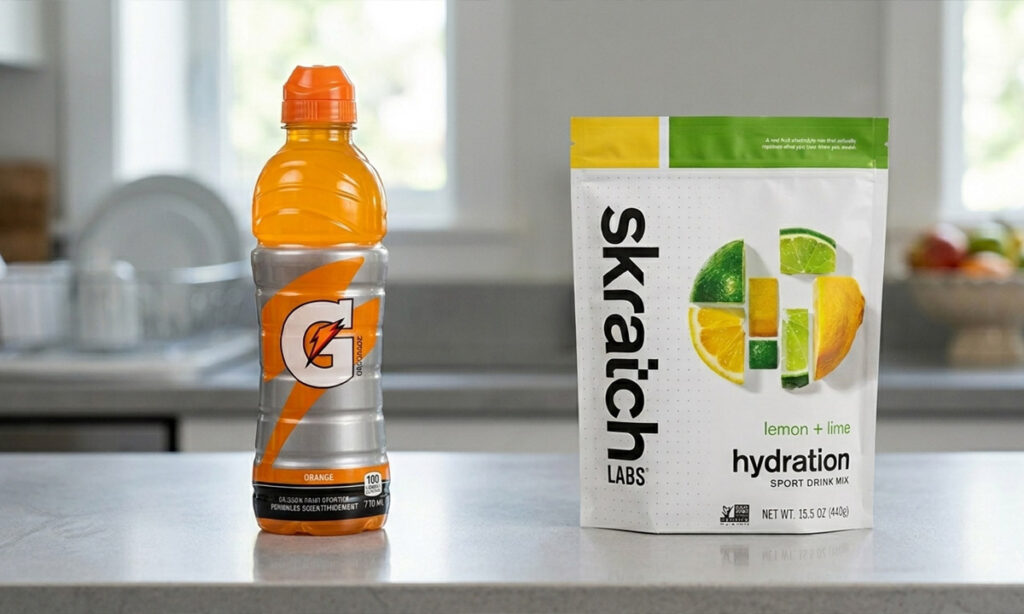
Gatorade has 250mg of sodium per bottle and 35g of sugar. Liquid IV has 530mg of sodium and 11g of sugar. Same category, completely different formula. If you’ve been training with a sports drink and wondering why you’re still cramping or fading late in a run, that gap is probably worth paying attention to. That’s the core question behind electrolyte powder for runners: is what’s on the shelf at every gas station actually built for what you’re doing?
TL;DR
Sports drinks like Gatorade and Powerade were built for general hydration, not endurance athletes. They’re high in sugar and low in sodium relative to what you actually lose when you run. Electrolyte powders like Precision Hydration, Skratch, and LMNT are formulated differently and usually make more sense for runs over 60 to 90 minutes. The right choice depends on how long you’re out, how much you sweat, and what else you’re eating on the go.
Key Takeaways
- Gatorade has about 250mg of sodium per 500ml. Liquid IV has 530mg. The difference matters on longer runs.
- High sugar in sports drinks can cause GI issues for some runners, especially at race pace.
- Electrolyte powders let you control concentration. Sports drinks don’t.
- Carbs and hydration are separate problems. Don’t confuse a sports drink with a fuelling strategy.
- Your sweat rate and sweat saltiness determine what you actually need.
What’s Actually in a Sports Drink
Gatorade and Powerade are built around a simple formula: water, sugar, and a small amount of electrolytes. That combination made sense when they were designed for team sport athletes doing short hard efforts with breaks in between.
Here’s the problem: a 500ml bottle of Gatorade has around 250mg of sodium and 35g of sugar. The powder version is slightly different, 190mg sodium and 29g of sugar per serving. Powerade is similar.
For a 45-minute jog, that’s probably fine. You’re not sweating enough to need serious sodium replacement, and a bit of sugar isn’t going to hurt. But once you’re running for 90 minutes or more, you’re losing significantly more sodium than those drinks replace. And all that sugar starts adding up without giving you much back.
That’s not a knock on sports drinks in general. It’s just a mismatch between what they were designed for and what longer-distance running actually demands.
What Makes Electrolyte Powders Different
Electrolyte powders are formulated with a different priority: sodium first, sugar second or not at all. That shift matters a lot for endurance athletes, but it helps to understand why sports drinks have so much sugar in the first place.
The sugar in Gatorade isn’t accidental. It’s there to give you quick energy and to help your gut absorb fluid faster. That combination made sense for the short, high-intensity efforts sports drinks were originally designed for. The problem is that formula tries to solve two problems at once: fuelling and hydration. For longer runs where you’re already taking gels or eating on the go, a sugar-heavy drink becomes redundant. You end up doubling up on carbs you don’t need and still falling short on sodium.
Electrolyte powders drop the sugar because they’re only trying to solve one problem: replacing what you lose through sweat. Liquid IV has 530mg of sodium per serving with 11g of sugar. Precision Hydration tablets come in at 500mg of sodium per tablet, with 2g of sugar. LMNT sits at 1000mg sodium with zero sugar. These aren’t minor tweaks to the Gatorade formula. They’re built on a completely different assumption about what the drink is supposed to do.
I used Gatorade early on because it was what was available and what every ad told you to drink. When I started taking nutrition more seriously, I switched to electrolyte powders. Partly because the sodium numbers made more sense for longer efforts, partly because I didn’t need the extra sugar on top of whatever I was already eating on the go.
A Quick Comparison
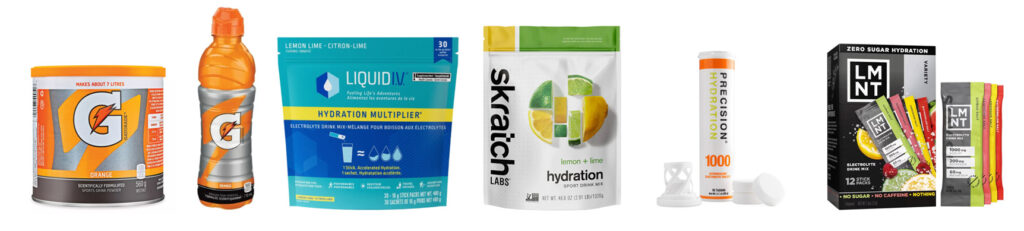
Here’s how the main options stack up on sodium and sugar per 500ml serving:
| Product | Sodium (500ml) | Sugar (500ml) | Type |
|---|---|---|---|
| Gatorade (liquid) | 250mg | 35g | Sports drink |
| Gatorade (powder) | 190mg | 29g | Sports drink (powder) |
| Liquid IV | 530mg | 11g | Electrolyte powder |
| Skratch Labs | ~380mg | 20g | Electrolyte powder |
| Precision Hydration (tablet) | 500–1500mg | 2g | Electrolyte tablet |
| LMNT | 1000mg | 0g | Electrolyte powder |
Precision Hydration makes tablets in three sodium levels: PH 500, PH 1000, and PH 1500. The number corresponds to the amount of sodium per tablet. If you’re new to them, PH 500 is a reasonable starting point. Heavier sweaters or athletes doing longer efforts often move up to PH 1000 or PH 1500.
Skratch sits somewhere in the middle, more sodium than Gatorade, less than Precision or LMNT, with some carbs included. It’s a reasonable middle ground if you want hydration and a bit of fuel in the same bottle.
A Note on Carbs and Hydration
It’s worth separating these two problems, because they often get tangled together.
Hydration is about replacing fluid and electrolytes, mainly sodium, that you lose through sweat. Fuelling is about keeping your blood sugar and muscle glycogen from running low. They’re related but not the same thing.
Sports drinks try to do both at once. That’s fine for shorter efforts where you need a bit of each. But on longer runs, you usually need more sodium than a sports drink provides, and you might be getting carbs from gels or real food anyway. Doubling up on sugar from your drink and your gels can cause stomach issues for some people.
That said, there’s a middle option worth knowing about: carb and electrolyte drink mixes. Products like Precision Hydration’s Carb & Electrolyte Drink Mix are designed to deliver both in a single bottle, with better sodium levels than a typical sports drink. Some athletes prefer keeping hydration and fuelling separate so they can control each independently. Others find the convenience of one drink easier to manage, especially during races. Neither approach is wrong. It comes down to what works for your stomach and your routine.
If you’re using gels or chews on your long runs, a low-sugar electrolyte powder like Precision Hydration or LMNT makes more sense in your bottle. If you want carbs and hydration combined, a dedicated carb-electrolyte mix is a cleaner option than a sports drink. And if you’re running shorter and not fuelling separately, something like Skratch gives you both in one.
For a deeper look at fuelling during endurance efforts, the Even Splits Lab Fuel Calculator can help you estimate what you need based on your workout length and intensity.
How Much Sodium Do You Actually Need?
This varies more than most people realize. Average sweat losses run somewhere between 500mg and 1500mg of sodium per hour, but some people lose significantly more. If you’ve ever finished a run with white residue on your skin or your clothes, you’re probably a saltier sweater.
The general guideline for runs over 60 to 90 minutes is to aim for roughly 500 to 1000mg of sodium per hour. Gatorade at 250mg per 500ml means you’d need to drink two full bottles per hour just to hit the lower end of that range. That’s a lot of liquid and a lot of sugar.
A high-sodium powder like Precision Hydration or LMNT gets you there in a single serving, with less fluid and without the sugar load.
If you want to figure out your personal sweat rate and estimate how much you’re losing, the Even Splits Lab Sweat Rate Calculator walks you through a simple test you can do at home.
For more on sodium specifically, see How Much Sodium Do You Actually Need During a Race.
Which One Is Right for You?
The honest answer is that it depends on your run length, your sweat rate, and what else you’re eating.
If you’re running under 60 minutes at easy effort: water is usually enough. Gatorade won’t hurt, but you don’t need it.
If you’re running 60 to 90 minutes at moderate effort: a mid-range option like Skratch or Liquid IV makes sense. Enough sodium to matter, some carbs if you want them.
If you’re running 90 minutes or more, training for a half marathon or longer, or you know you sweat a lot: Precision Hydration or a similar high-sodium powder is worth the investment. LMNT works too if you’re getting carbs from food or gels.
Gatorade is a reasonable starting point. But most runners who start paying attention to their hydration end up moving past it eventually.
FAQ
Not exactly. Gatorade is fine for short, easy runs. The issue for longer efforts is that it’s low in sodium relative to what most runners lose through sweat, and the sugar content is high without a proportionate electrolyte payoff. It’s not harmful, just not optimized for endurance use.
It depends on your sweat rate and whether you’re fuelling separately. Precision Hydration is a strong choice if you want a high-sodium option with flexibility in concentration. Skratch works well if you want some carbs included. LMNT is popular but has zero sugar, so pair it with other fuel sources on long efforts.
Usually not. For runs under 45 to 60 minutes, water is sufficient for most people. Electrolytes become more important as duration increases, especially in heat.
Drinking plain water without sodium replacement on long runs can actually dilute your blood sodium levels. It’s a condition called hyponatremia and it’s more common in endurance events than most people realise. Electrolytes aren’t optional on efforts over 90 minutes.
White residue on your skin or kit after a run is the most obvious sign. If you’re cramping consistently on longer efforts despite drinking enough, sodium loss is worth looking into. Our Sweat Rate Calculator can help you estimate your losses based on a simple test you can do at home.
Related Posts
The Difference Between Bonking and Cramping (And How to Fix Both) — if you keep fading or seizing up late in a run, understanding the cause matters more than guessing the fix.
How Much Sodium Do You Actually Need During a Race — a closer look at the numbers behind sodium loss and replacement.
How to Read Your Heart Rate Zones (and Why Most People Get Them Wrong) — if you’re training in the right zones, your hydration needs change too.
Sources